

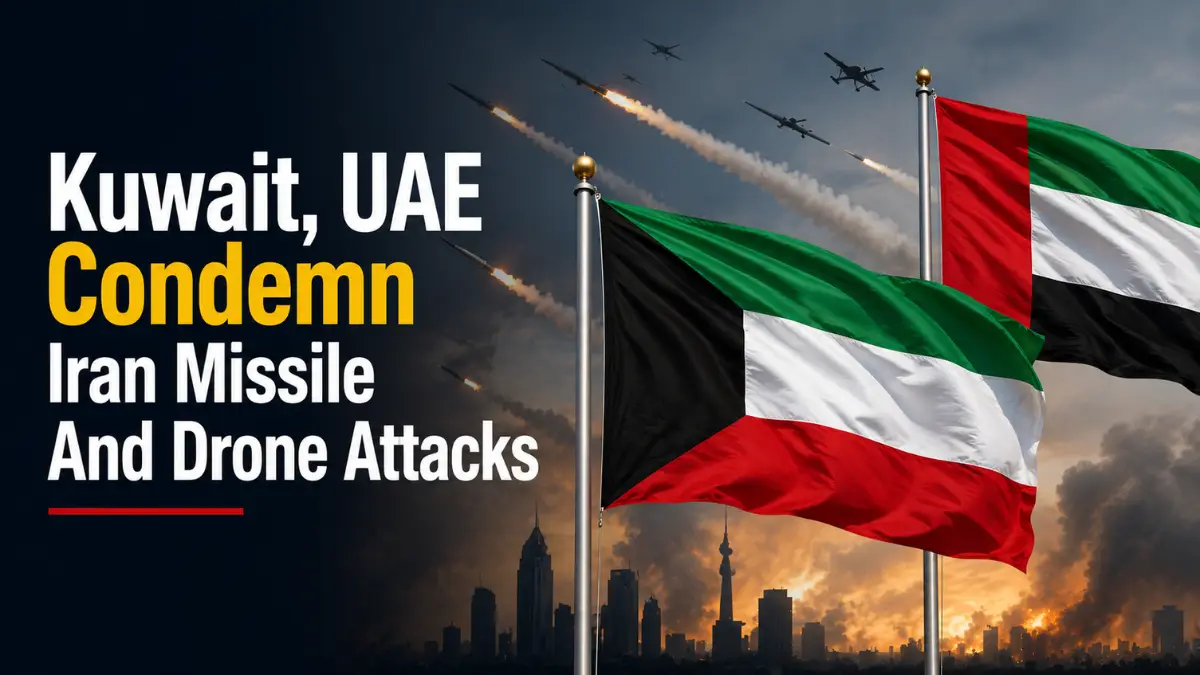
As if the fragile ceasefire talks between US-Israel and Iran weren’t confusing enough, the Gulf region witnessed yet another setback that can be a point of major flashpoint. On Thursday, as most countries in the Middle East are in the middle of the long Eid Al Adha celebrations and consequent holidays, Iran’s attack on Kuwait has threatened escalation once again.
Following the attack, Kuwait has issued a sharply worded statement condemning Iranian missile and drone attacks targeting Kuwaiti territory.
Related Stories

In a statement that was released on X by Kuwait’s Ministry of Foreign Affairs, the country has described the attacks as a “dangerous escalation” and a direct violation of Kuwait’s sovereignty, security and territorial integrity. The ministry further added that the attacks endangered civilian lives and key facilities within the country.
What makes the situation even more worrying is the timing. Kuwait categorically pointed out that the attack comes at a moment when countries in the Gulf and beyond are trying to de-escalate tensions and avoid further instability in the Middle East. However, this latest development threatens to push the region deeper into uncertainty.
The statement did not mince words in its criticism of Iran, demanding an immediate and unconditional stop to the attacks while also holding Tehran fully responsible for the escalation. Kuwait also accused Iran of violating international law, the United Nations Charter and Security Council Resolution 2817 of 2026.
Related Stories

While geopolitical statements are usually measured and diplomatic in tone, this one carried a noticeably sharper sense of urgency, reflecting Kuwait’s growing concern over the escalating situation. Kuwait’s language reflected genuine concern over how quickly the situation could spiral if tensions continue to rise.
The ministry also made it clear that Kuwait reserves the right to defend itself and take all necessary measures to protect its land and infrastructure against any future aggression. The statement referenced Article 51 of the United Nations Charter, which gives nations the right to self-defense.
Related Stories

At the time of writing, there was no official response from Iran regarding Kuwait’s allegations.
Tension Rise
The development has sparked reactions across the Gulf, especially among neighbouring countries already watching the regional situation very closely. The UAE for one has strongly condemned the Iranian terrorist attacks on the State of Kuwait with missiles and drones. In a statement, the Ministry of Foreign Affairs (MoFA) affirmed that these terrorist attacks constitute a flagrant violation of the sovereignty of Kuwait and a threat to its security and stability.
The Ministry expressed the UAE’s full solidarity with Kuwait and its support for all measures aimed at safeguarding its security and stability.
Related Stories

Other Gulf states have also joined in condemning the strike. Experts believe any direct attack involving missiles and drones immediately raises fears of wider instability, particularly in a region that remains central to global energy markets and international trade routes.
Most analysts say that given the history of what has happened in the last three months, the big question remains if diplomatic efforts and widespread condemnation alone can contain the fallout before the situation escalates further. But one thing is certain – the latest attack on Kuwait is a worrying sign and what happens next can alter the course of our collective future.