

Early Control Without Impact
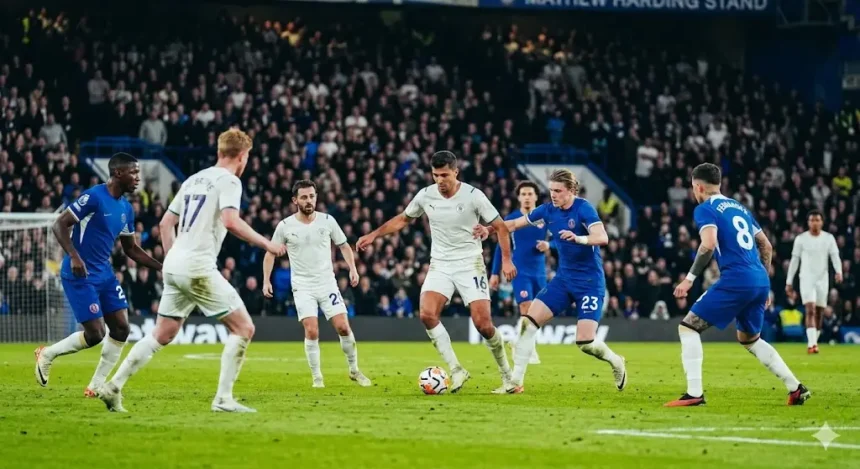
Chelsea didn’t begin badly, but something still felt a bit off in their play. They did get on the ball at times and tried to push forward, but the flow didn’t really last.
City looked more at ease from early on, nothing too complicated. They kept the ball moving, simple passes, nothing rushed, and that alone started to create small spaces.

City’s Possession Begins to Tell
As minutes passed, a difference in control could be seen. City had more of the ball, but more than that, they handled it better.
The passing numbers showed that gap. With over 600 passes and higher accuracy, they were able to keep Chelsea chasing instead of building.
Spaces Start to Appear
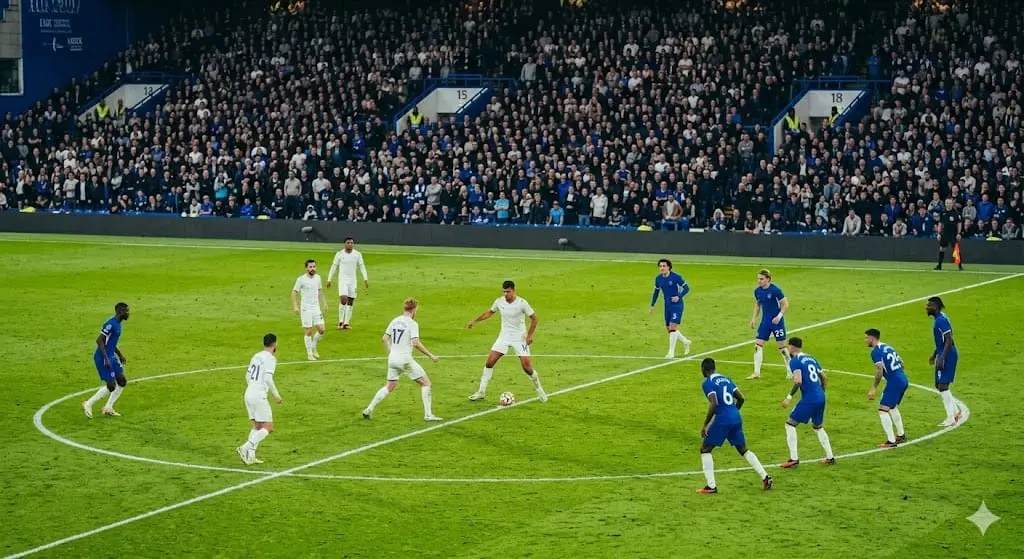
Chelsea’s shape didn’t fully fall apart, but it wasn’t really tight either. Small spaces kept opening between midfield and defence, and City kept getting into them.
It didn’t always lead to chances immediately. But over time, those repeated situations made it harder for Chelsea to stay organized.
Pressure Turns Into Goals
The first goal didn’t feel random. City had already been pushing and getting closer to the box more often. After the goal, the game didn’t change completely, but there was a small shift. Chelsea had to respond, and that only gave City a bit more room to work with.
Manchester City vs Chelsea Tactical Analysis: Second Half Control
After the break, the pattern didn’t really change. City stayed patient and continued with the same approach. Chelsea did try to step forward more, but it didn’t really continue for long. City’s midfield control kept things calm and stopped the game from becoming messy.
Moments That Decided It
The second and third goals came from situations that had been building. City were already finding better positions and getting more touches in dangerous areas. It wasn’t about one big mistake. It was more about repeated pressure and better use of space over time.
Game Defined by Control
This wasn’t one of those end-to-end games with constant attacks. It was more about who managed the game better across phases. City didn’t rush their play, and that helped them stay in charge for most of it. Chelsea had their moments, but they couldn’t build on them for long.
Conclusion
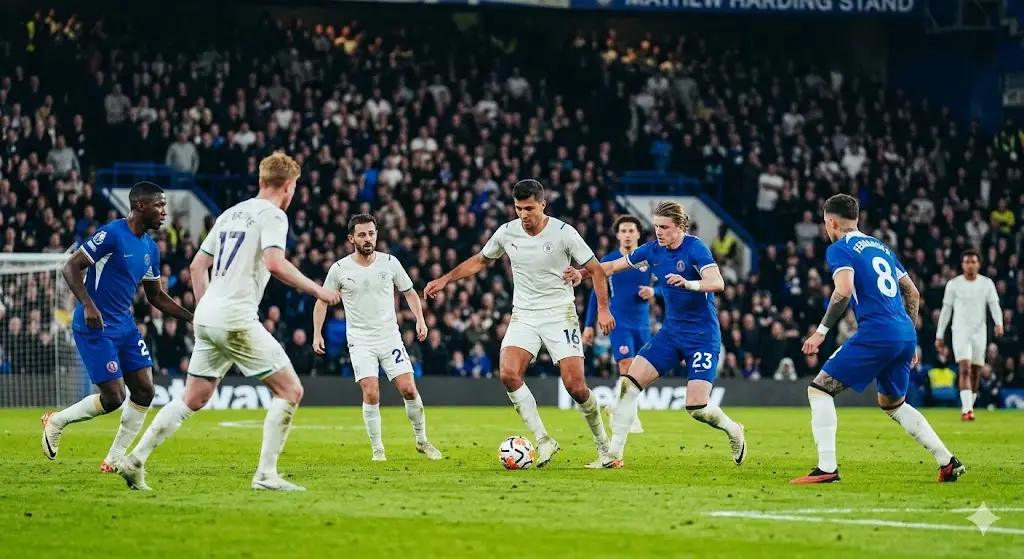
Chelsea was in the game at times, but they couldn’t keep control for long stretches. City just kept things simple and slowly built their lead. In the end, it came down to how both teams used the ball and the spaces around them. That’s where the result really took shape.
Also Read: Al-Nassr 2–0 Al-Akhdoud: A Game That Never Really Got Out of Their Control