
When Control Isn’t Enough
Barcelona didn’t lose this tie in one moment. It felt more like something that kept building quietly across both legs, and then finally showed itself when it mattered most.
They actually started this game well. Two goals early, quick tempo, direct runs — it looked like everything was going to plan.

For a brief period, it really did feel like the comeback was there. The energy, the movement, even the belief… it was all visible. But then, almost suddenly, the same issues came back again.
A High Line That Never Adjusted
Even when Barcelona was in control, there was always that small risk sitting underneath. The defensive line stayed high, maybe a bit too high, and Atlético kept waiting for that exact moment. And it came.
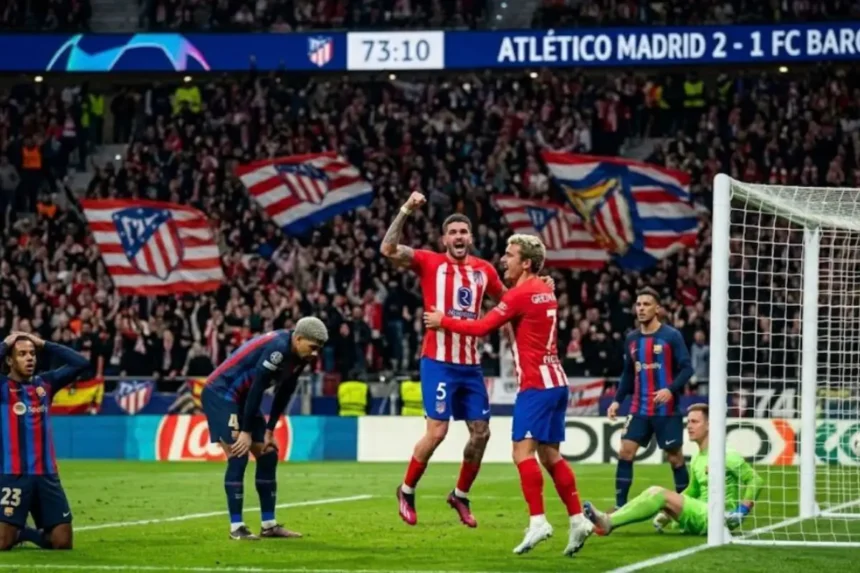
The equalizer didn’t feel random. It came from a transition, a quick break, the kind Atlético look for again and again. Barcelona had numbers forward, but not enough protection behind.
That’s the thing — it wasn’t the first time. It kept happening in small flashes before that as well. Still, there was no real change in approach.
Game State Changed, Approach Didn’t
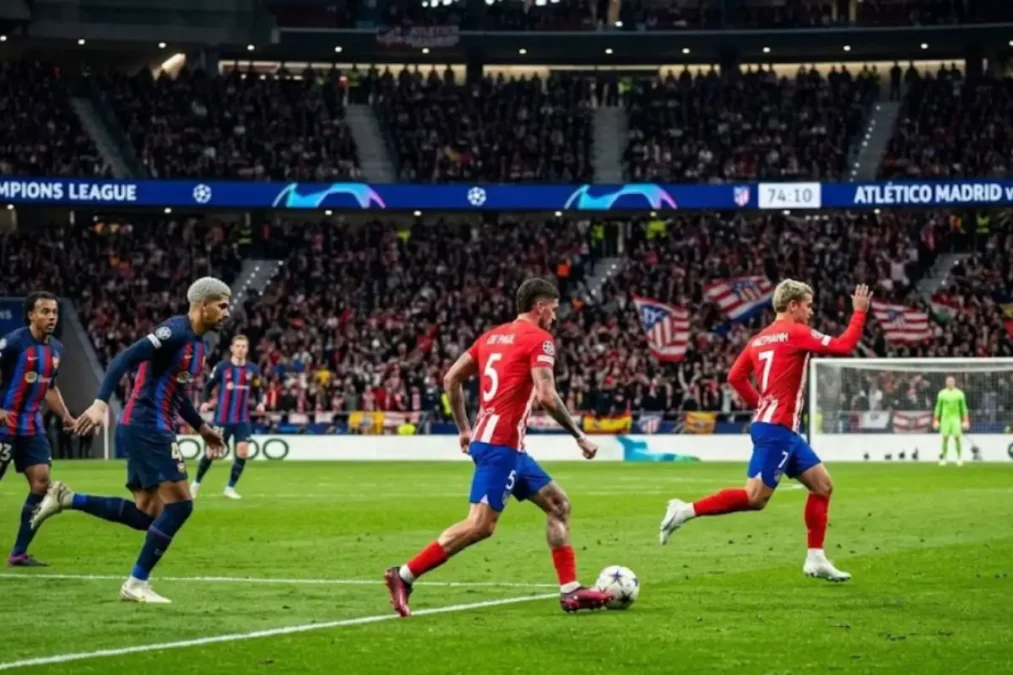
At 2-0, the game was in Barcelona’s hands. They didn’t need to force it anymore. Slowing things down, controlling space, even dropping a few yards deeper — those options were there. But they kept playing the same way.
Same structure. Same positioning. Same risks. Atlético, on the other side, looked comfortable with that. They weren’t rushed. They didn’t panic even when they went behind. They stayed in the game, waited for moments, and when space appeared, they used it. It wasn’t dramatic. Just consistent.
Possession Without Control
Looking at the numbers, Barcelona had more of the ball. More passes, better accuracy, longer spells in possession. But it didn’t fully translate into control of the tie. A lot of their possession came in safe areas, or in phases where Atlético were already set. The spaces that mattered — especially in transition — kept opening the other way.
Even after the break, when Barcelona pushed higher and spent more time near the box, the pattern didn’t really shift. There was pressure, yes. But also, vulnerability.
Moments That Slipped Away
There were chances to make it 3-0. That would have changed everything. Fermin had one. Musso made the save. Then later, Torres thought he had another, but the offside call pulled it back. Those moments felt important even before the final whistle.
Because once Atlético got their goal, the tie started to tilt again. Not sharply, but enough. And then the red card just made things more difficult. At that point, the game became stretched, and Barcelona were chasing something that already felt slightly out of reach.
Stubbornness or Identity?
There’s always a fine line between sticking to your idea and refusing to adapt. Barcelona stayed committed to their structure, their positioning, their way of playing. In isolation, that’s not unusual.
But across two legs, against a team like Atlético, it felt like there were chances to adjust — even slightly — and they weren’t taken. The high line stayed. The spacing stayed. The risks stayed. And Atlético kept finding ways to use them.

A Tie Decided in Small Spaces
This wasn’t about domination. It didn’t feel like one team completely controlled everything. It came down to smaller details — how space was managed, how transitions were handled, and how each team reacted to key moments.
Atlético didn’t need the ball as much. They needed the right situations. Barcelona had more of the game, but not always the parts that mattered most.
Conclusion
In the end, Barcelona didn’t fall short because of one mistake. It was more about how the game kept repeating itself, in slightly different ways, without much changing on their side.
They showed they could break Atlético down. They showed they could score. But they also kept leaving the same gaps open. And over two legs, that was enough to decide everything.
Also Read: Al-Nassr 2–0 Al-Akhdoud: A Game That Never Really Got Out of Their Control