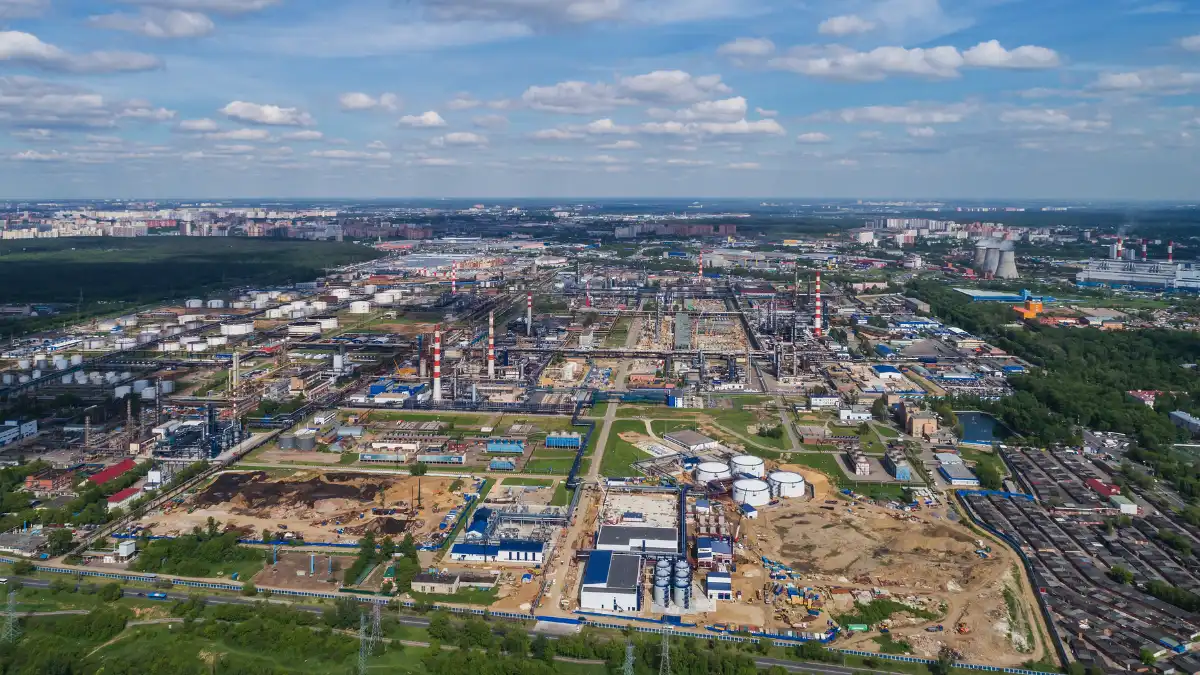
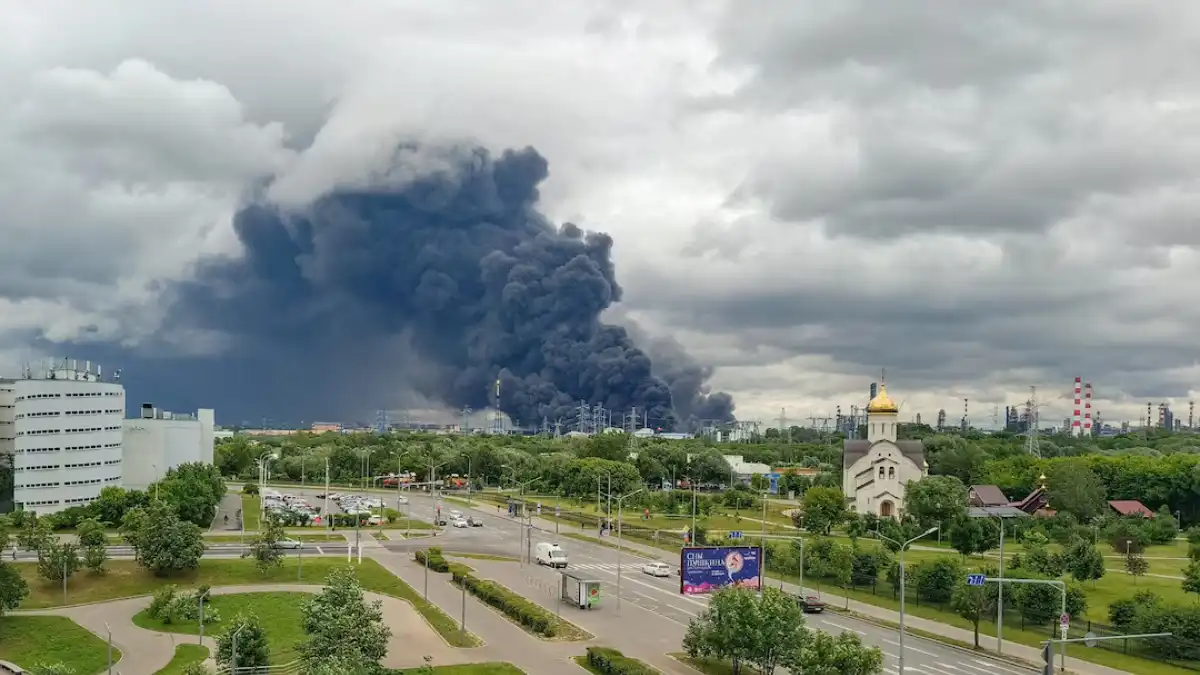
This week, Ukraine hit Russia hard. Drones attacked the high-level, Moscow oil refinery in the Russian capital. The attack set off fires. The thick black smoke hung for hours over the city. This is one of the biggest strikes on Moscow since the war began over four years ago.
What Happened
On Tuesday, June 16, Ukrainian drones attacked a Russian oil refinery in Moscow. A fire in connection with the strike and damage to a critical processing unit also occurred. Two days later Ukraine was back at it again. However, this time on a bigger scale. A second wave of 1000 drones attacked the same refinery on June 18, marking the second attack in seven days. There was smoke and fire in the city. There were also disruptions to local flights.
Related Stories
It was Ukraine’s biggest drone strike against Moscow in two years. According to Russian media, 194 drones were shot down above Moscow. The strikes damaged some homes in the area and badly affected the refinery. So this was by no means an insignificant raid. This was a tremendous display of force.
The mayor of Moscow stated that almost 200 drones were downed before they reached Moscow. Some, however, escaped to hit the main oil refinery. Also, officials temporarily suspended flights at four airports in Moscow.
How Ukraine Decided to hit Moscow Oil Refinery?
Ukraine’s military claimed it targeted the refinery as it was assisting the Russian army. Simply put, this refinery produces fuel. That fuel fuels Russian tanks, trucks and planes. Knocking it slows down Russia’s war machine, albeit for a time.
This is not the first time Ukraine has used this strategy. Russia’s refineries have been targeted in Ukraine in the past year. These drone attacks have already caused fuel shortages in many regions of Russia. In certain regions, long lines have been established at gas stations. As a consequence, with each new strike, the pressure on Russia’s fuel supply increases.
Zelenskyy’s Strong Words
Ukrainian President Volodymyr Zelenskyy was not a man who had a lot of self-control. The attacks were in revenge for a Russian assault on a historic monastery in Kyiv this week, he said. If Russia attacks it “Moscow will burn,” he warned.
He also singled out one man for blame. Zelenskyy said it was important for the Russian people to realize “one man is to blame for this war, it is Putin, and ordinary people are paying the price for it.” Furthermore, he presented these long-range raids as more than a matter of military victory; he made them an initiative towards a peace approach by the Russians.
Moscow Oil Refinery: Russia’s Response
Russia didn’t just sit back. Russia struck back on the same night with a big attack. It launched ballistic missiles at least seven times and 239 drones in Ukraine. Ukraine claimed to shoot down or destroy at least 216 of them.
The raid was one of the largest single night raids by Ukraine during the war. It was a hike by both sides, at the same time. Both sides refused to back down.
A Bigger Picture
This attack was no isolated incident. It was hours before NATO defense ministers were to meet in Brussels where Ukraine’s security was a prominent issue. Zelenskyy, meanwhile, said he had met with President Trump and French President Macron shortly before the strike and they had discussed an “important coordination call” that could produce significant change.
Russia, meanwhile, is suffering the effects. Russian forces are in crisis, facing a shortage of a certain type of missile capable of shooting down drones, says the Ukrainian military. This shortage is caused by the improved Ukrainian drone technology and quicker production.
The Future Outlook
The attack on the Moscow oil refinery is another example of the evolving nature of the war. Instead of tanks, it is drones that are the primary weapon. Now fuel supply, in addition to front lines, is a major target.
The way to peace seems as distant as ever, as both sides continue to pound the stones. At present, the smoke above Moscow speaks louder than any word.
Read More: Barakah Nuclear Attack Pushes a New Oil Price Hike