
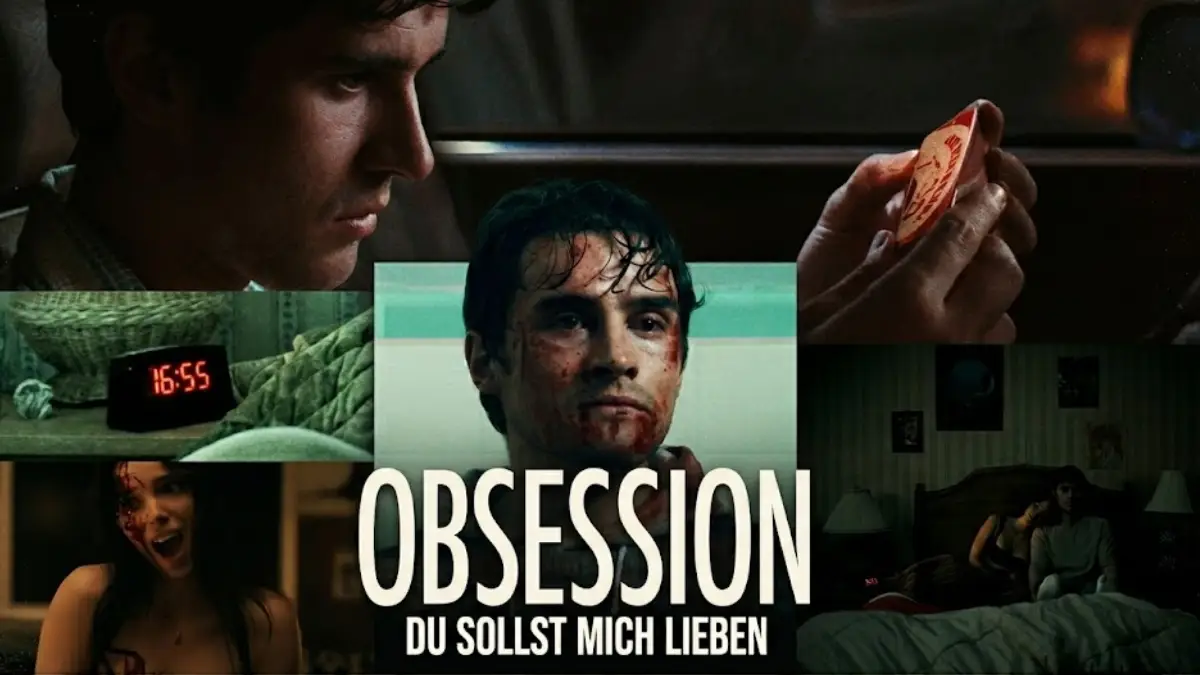
Directed by rising horror filmmaker (Curry Barker), Obsession is a deeply disturbing psychological horror tale that explores the consequences of desire, loneliness and emotional dependency. The film follows the main character Bear, a socially awkward music store employee who makes a rather bizzare supernatural wish for his childhood friend Nikki to fall in love with him. However, what begins as a dream quickly spirals into a life of terror as Nikki’s affection transforms into something obsessive, traumatizing and violent. With horror fans hyping this one up after its debut at TIFF, it posed an intriguing yet important question: will Obsession truly live up to expectations, or will it become another forgettable popcorn B-movie that audiences would wait to watch online?
Curry Barker crafts an atmosphere that feels suffocating from the first frame, slowly yet steadily binding both the audience and the protagonist inside a twisted downward spiral of terror, guilt and fear. The screenplay blends supernatural horror with psychological thrill, creating tense moments where the silence speaks louder than anything. The film’s strength lies in how believable its emotional conflict feels, making the terror hit even harder once the story descends into chaos.

Inde Navarrette is perfect as Nikki, easily shifting gears between warmth, obsession and outright menace in a performance that becomes progressively unsettling as the narrative plays out. Michael Johnston equally delivers an excellent performance as Bear, portraying the character with a mixture of vulnerability, desperation and selfishness that makes the audience feel sympathetic yet deeply frustrated at times.
However, despite its strong atmosphere and performances, Obsession begins to lose it’s steam as the story progresses. The film’s major issue lies in its pacing, particularly during the second half where certain scenes feel stretched out for tension rather than meaningful character development. While the slow-burn approach works initially, the narrative eventually circles around the same emotional conflict repeatedly, causing some moments to feel repetitive and bland instead of suspenseful.
Another glaring issue is the climax , despite being intense and brutal , does not entirely deliver the emotional payoff the film spends time building toward. Twists often become predictable once the mystery starts to unravel, reducing the shock factor during the final act. The film also leans heavily on atmosphere over narrative progression, meaning viewers expecting a more plot heavy horror experience may find themselves disengaged by the slower pacing.
Overall, Obsession is a disturbing horror film that stays with you long after it ends. Instead of relying only on jump scares, it turns loneliness and desire into something deeply unsettling. However, uneven pacing, weak side characters, and vague storytelling stop it from reaching its full potential.