From a 1.7 billion dollar Sphere on Yas Island to a two-kilometre waterfront in Ras Al Khaimah, the country that turned desert into a global destination is not slowing down.
There is a reason that travellers from over 190 countries choose the UAE as their destination every year. It is not just the sunshine or the shopping or the skyline, though all three help considerably. It is something harder to replicate: the feeling that whoever you are, wherever you come from, this place was built with you in mind.
That philosophy is not accidental. The UAE has spent decades making tourism not just a sector but a national strategy, investing in infrastructure, experiences, accessibility and hospitality at a scale that few countries in the world have attempted. Visa-on-arrival for dozens of nationalities. Multiple entry options for long-term visitors. A hospitality industry that consistently ranks among the most service-oriented anywhere. And now, a wave of new projects that will redefine what visiting the UAE can look and feel like.
The momentum building across the country in 2026 is genuinely significant.
Abu Dhabi Is Thinking at a Different Scale
Yas Island has always been a destination that competes with the best leisure destinations in the world. Ferrari World, Warner Bros World, SeaWorld, Yas Waterworld — the island has spent years stacking world-class attractions into one address. What is happening next takes that ambition further.
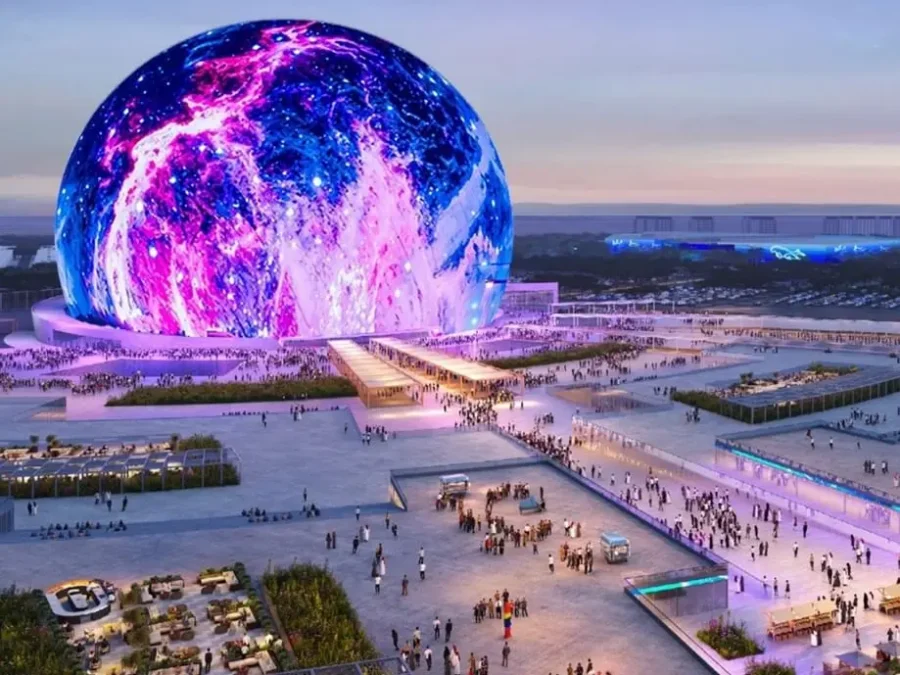
Sphere Abu Dhabi, announced this year with a construction cost of 1.7 billion US dollars, will become the first Sphere venue built outside the United States. Sitting between Yas Mall and SeaWorld Abu Dhabi, it will hold up to 20,000 people at a time, hosting concerts, immersive experiences, conferences and major sporting events within a structure designed to also celebrate Emirati culture and support regional talent.
Beyond the Sphere, Miral has committed more than Dh12 billion to Yas Island development over the next five years, covering new theme park experiences, expanded attractions and immersive entertainment that will keep the island growing as a global leisure destination well into the next decade.
These are not projects being built in hope. They are projects being built to meet demand that already exists and a tourism trajectory that the numbers consistently support.
Dubai Keeps Reinventing Itself
The thing about Dubai that visitors often remark on after multiple trips is that the city is never quite the same as it was before. Something new has opened. Something familiar has been transformed. That restlessness, that refusal to treat what already exists as finished, is part of what keeps people coming back.
Two approvals from 2026 reflect that instinct clearly.
Al Layan Oasis, covering one million square metres, will bring something Dubai has been expanding toward for years: meaningful green space woven into the city’s recreational fabric. A lake stretching across more than 250,000 square metres at its heart, surrounded by cycling tracks, walking paths, an outdoor cinema, camping grounds for 100 caravans, family spaces and retail, all within a sustainable environmental framework. It is the kind of development that serves residents and tourists equally well.
Umm Suqeim Beach, one of the most beloved stretches of Dubai coastline, is being reimagined through a Dh500 million master plan that will push its annual visitor capacity to around six million people. A 38-metre observation tower will anchor the revamped destination. A two-kilometre coastal retaining wall will reshape the shoreline. Walking and cycling tracks, upgraded facilities and smart technology integrated into every layer of operations will make it one of the most thoughtfully designed beach experiences in the region.
Dubai has always understood that people visit for the spectacle but return for the life they can imagine living here. Both projects serve that understanding.

Sharjah and Ras Al Khaimah Add Their Own Chapters
The UAE’s tourism story has never belonged only to its two most famous cities, and 2026 is making that clearer than ever.
In Khorfakkan, Sharjah laid the foundation stone for Abu Al Keizan Marine Village, a seven-million-square-foot development drawing directly from the heritage of the region’s traditional coastal communities. A natural harbour carved into the rocks, a seafront boulevard, Islamic architectural details, a hotel, residential buildings, commercial spaces and a mosque are all part of a project explicitly designed to preserve and celebrate its surrounding natural environment and marine ecosystem.
Khorfakkan also welcomed the Dh700 million Khorfakkan Resort this year, bringing 573 residential units, a private beach, elevated green spaces covering 100,000 square feet, outdoor pools, children’s recreation facilities and integrated hotel services to a city that has been quietly becoming one of the UAE’s most compelling coastal addresses.
In Ras Al Khaimah, development began on Al Rams Waterfront, a 2,000-metre stretch of coastline being transformed into a community and visitor destination complete with dedicated tracks for walking, jogging and cycling, green spaces, playgrounds, event plazas, parking and public facilities. Al Rams Boulevard sits alongside it, together forming an integrated destination built around quality of life, natural surroundings and a sense of national identity.
What All of This Adds Up To
The UAE attracted 17.15 million international visitors to Dubai alone in 2024, a record at the time. The country has since continued building toward even larger numbers, and the projects confirmed across all four emirates in 2026 tell you exactly where the confidence to keep building comes from.
Tourism here is not reactive. It is deliberate. Every project reflects a decision about what the UAE wants to be for the people who visit it and the people who call it home. And right now, across Abu Dhabi, Dubai, Sharjah and Ras Al Khaimah, that decision is being poured into concrete, landscaped into coastlines and designed into experiences that will be drawing visitors for decades.
The UAE was always a destination. It is now actively becoming something rarer: a place people genuinely cannot imagine not coming back to.