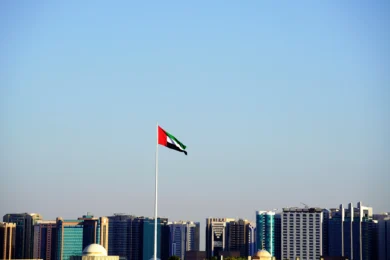

The United Arab Emirates said on Tuesday it quit the Organisation of the Petroleum Exporting Countries (OPEC) and OPEC+, dealing a heavy blow to the oil-exporting groups and their de facto leader, Saudi Arabia, at a time when the Iran war has caused a historic energy shock and unsettled the global economy.
The stunning loss of the UAE, a longstanding OPEC member, could create disarray and weaken the group, which has usually sought to present a united front despite internal disagreements over issues ranging from geopolitics to production quotas.
UAE cites “national interests” as it ends decades-long role in OPEC
The UAE said it would withdraw to focus on “national interests”, a statement carried by the official WAM news agency said.
The UAE has been an OPEC member through the emirate of Abu Dhabi since 1967, four years before the former British protectorate became a country. The last OPEC member to withdraw from the cartel was Angola in 2024.
“This decision reflects the UAE’s long-term strategic and economic vision and evolving energy profile,” the UAE statement said.
“During our time in the organisation, we made significant contributions and even greater sacrifices for the benefit of all,” it added.
“However, the time has come to focus our efforts on what our national interest dictates.”
No Consultation with Saudi Arabia as UAE Finalised Exit Decision
UAE Energy Minister Suhail Mohamed al-Mazrouei told Reuters the decision was taken after a careful look at the regional power’s energy strategies.
Asked whether the UAE consulted with Saudi Arabia, he said the UAE did not raise the issue with any other country.
“This is a policy decision, it has been done after a careful look at current and future policies related to level of production,” said the energy minister.
OPEC Gulf producers have already been struggling to ship exports through the Strait of Hormuz, a narrow chokepoint between Iran and Oman through which a fifth of the world’s crude oil and liquefied natural gas normally passes, because of Iranian threats and attacks against vessels.
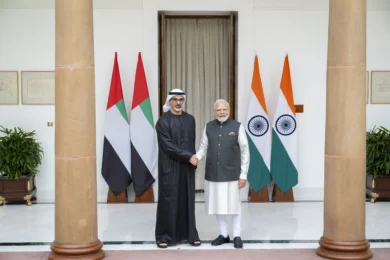
Mazrouei said the move, in which the UAE will also leave the OPEC+ grouping, would not have a huge impact on the market because of the situation in the strait.
UAE exit seen as boost for Donald Trump
The UAE’s exit from OPEC represents a win for United States President Donald Trump, who, in a 2018 address to the UN General Assembly, accused the organisation of “ripping off the rest of the world” by inflating oil prices.
Trump has also linked US military support for the Gulf with oil prices, saying that while the US defends OPEC members, they “exploit this by imposing high oil prices”.
The move came after the UAE, a regional business hub and one of Washington’s most important allies, criticised fellow Arab states for not doing enough to protect it from numerous Iranian attacks during the war.