On May 6, UAE Minister of Economy Abdulla bin Touq Al Marri stated that the UAE’s economic growth will exceed 3.1 percent in 2026. This was not just speculation, but was supported by data. The projection was made during the fourth edition of Make it in Emirates 2026.
Officials linked the country’s economic resilience to diversification, growth in manufacturing, and an increase in foreign investment. Abdulla bin Touq Al Marri stated that geopolitical developments have not had any significant impact on the national economy, given its diverse structure and broad international partnerships.
Related Stories


The Trade Numbers
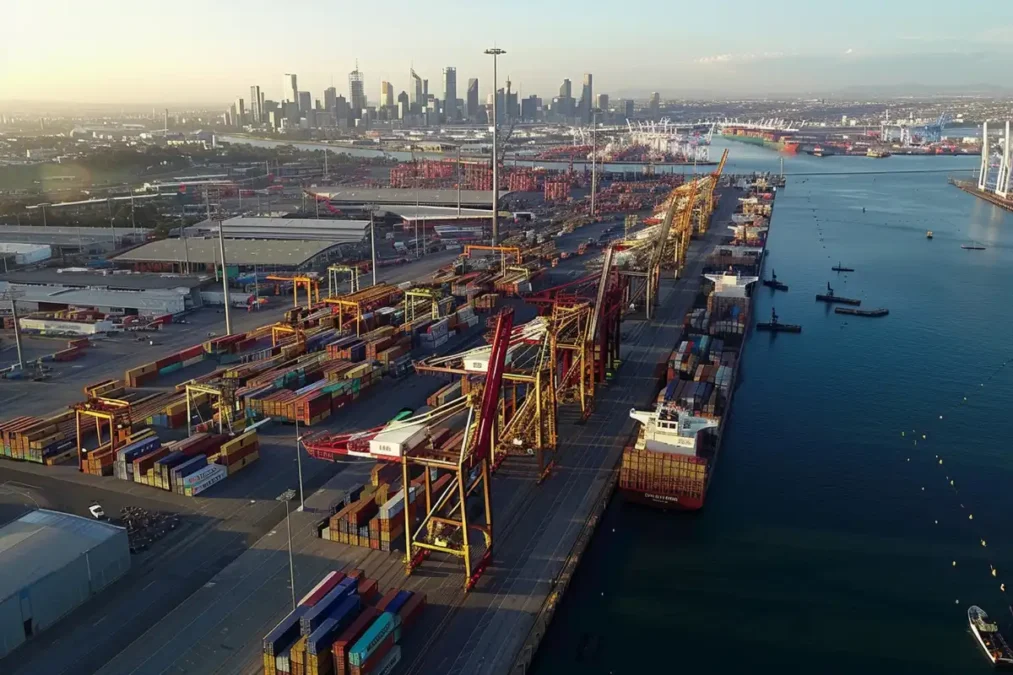
Official data puts total foreign trade at Dh6 trillion in 2025. That is up 15 percent from the previous year. Non-oil merchandise trade increased by 27 percent to Dh3.8 trillion. The World Trade Organisation says the UAE broke into the top ten global merchandise exporters for the first time. It now ranks ninth. Trade in services passed Dh1.14 trillion, also a first. These are solid 2025 numbers. They give 2026 a strong starting point.
Trade growth is also supported by the UAE’s expanding Comprehensive Economic Partnership Agreement programme. During the first quarter of 2026, new agreements were signed with the Philippines, Nigeria, Gabon, and the Democratic Republic of the Congo. Through these agreements and logistics expansion, the UAE aims to push non-oil foreign trade to Dh4 trillion by 2031.
Related Stories

The Business Activity
February 2026 data shows total banking sector assets topped Dh5.472 trillion. The capital adequacy ratio was 17 percent. The liquidity coverage ratio stood above 146.6 percent. Both exceeded global standards by a wide margin. The UAE now has over 1.45 million registered companies. Dubai Chamber data shows 2,709 new firms joined in March alone, and that happened during the conflict, not before it. Non-oil GDP now makes up 78 percent of total output.
Apart from banking and trade, investment institutions are also reporting strong balance-sheet growth. Mubadala Investment Company reported its assets reaching Dh1.4 trillion, with overall returns exceeding 10 percent over five- and ten-year periods. ADNOC also entered the world’s most valuable brands ranking for the first time and maintained its position as the UAE’s most valuable brand for the eighth consecutive year.


The projection of UAE’s economic growth exceeding 3.1 percent is not being evaluated through oil revenues or short-term regional shocks alone. The blend of trade, logistics, financial services, tourism, manufacturing, and technology is carrying a larger share of the growth cycle.
The World Trade Organisation’s ranking and banking expansion, alongside continuous business registrations, suggest that the country is not just a regional safe haven. It is a long-term global commercial hub that continues to hold steady through increasingly unstable regional geopolitical environments.
Read More: Missiles, Markets and Resolve: UAE Stands Strong Amid Regional Uncertainty
Related Stories