
Dubai’s economy grew faster than almost any comparable city in the world in 2025. The real estate market hit AED 917 billion in transactions, according to Dubai Land Department data. The Ministry of Economy reported that the country’s non-oil GDP crossed 78 percent of total output. Dubai’s population surpassed 3.8 million. But beyond that growth story, a structural cost is accumulating quietly. And it is measured in dirhams lost every morning on Sheikh Zayed Road. Economic experts have quantified the monetary losses from Dubai traffic congestion at AED 4.6 billion annually, equivalent to more than 3 percent of the city’s GDP, according to analysis cited by the Oxford Business Group.
That estimate predates the population surge of the past three years. According to the TomTom Traffic Index 2025, Dubai motorists lost 72 hours to traffic jams in 2025. This is 6 hours 23 minutes more than data recorded in 2024. The current economic cost is therefore almost certainly higher. This is no longer just a city with congestion. It is a city where rapid expansion is creating a measurable productivity drain that directly affects businesses, workers, and infrastructure planning alike.
Related Stories

Dubai Traffic Congestion Grows
The geography of Dubai’s expansion explains much of the pressure. Areas including Dubai South, JVC, Arjan, DAMAC Hills, and Arabian Ranches witnessed major population growth over the past few years. Employment is heavily concentrated around DIFC, Downtown Dubai, Business Bay, Dubai Internet City, and Dubai Marina. That creates directional traffic flows in peak hours that road systems were never originally designed to absorb at this scale.
According to Salik’s Q3 2025 investor presentation, there were 4.65 million registered active vehicles in Dubai, up from 4.56 million in Q2. The quarterly increase reflects how population-driven vehicle ownership is faster than infrastructure growth. Car ownership in Dubai is at approximately 541 vehicles per 1,000 residents. It is higher than London, New York, and Singapore, based on comparative mobility data cited by regional transport analysts.
RTA data also shows that nearly one million commuters enter Dubai daily from neighbouring emirates including Sharjah and Ajman, according to report by The National. That means Dubai traffic congestion is no longer entirely an internal issue. It has become a regional mobility problem that is shaped by housing affordability, population distribution, and cross-emirate workforce movement.
Related Stories

The steady increase in congestion contradicts social media claims that expatriates are leaving the UAE in large numbers due to regional conflict fears. Recent data indicate sustained economic activity, rising company registrations, and increasing transport demand. Dubai Chamber reported nearly 70,000 new business licenses issued in 2025. The airport passenger traffic and vehicle registrations continue to rise through early 2026. If large-scale outward migration were taking place, indicators of congestion would probably be improving rather than getting severe.
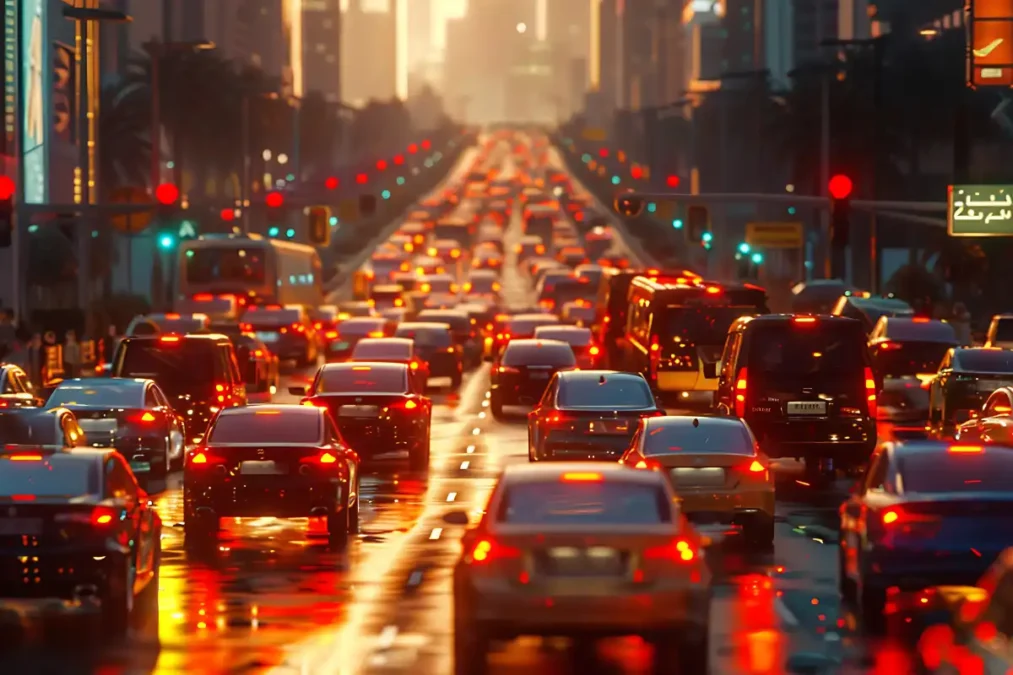
Where The Economic Losses Go
The AED 4.6 billion annual cost of congestion is not theoretical. It appears directly in business operating expenses, fuel consumption, logistics delays, and lost employee productivity. The Oxford Business Group notes that increased traffic volumes raise delivery costs and commuting expenses while reducing overall efficiency across the urban economy. Workers spend more time travelling, businesses spend more on transportation, and supply chains become slower during peak operating hours.

Studies by global traffic analytic firms including TomTom and INRIX consistently show the worsening congestion increasing fuel consumption, delivery costs, and productivity losses in major cities. The cities that introduced congestion charging saw tangible improvement. After introducing congestion pricing in January 2025, London reduced congestion by 26 percent, while New York reported a 25 percent reduction in delays within months of launching.
Dubai’s Salik system already partially follows this logic. However, analysts argue that it still functions more as a toll collection network than a fully optimised management system for Dubai traffic congestion. Peak-hour demand remains concentrated despite multiple toll gates. This is because pricing structures have not yet shifted driver behaviour. The city is growing denser. Economists increasingly view dynamic congestion pricing as economically unavoidable.
Can Infrastructure Catch Up?
RTA surveys noted that some arrangements for flexible working hours and remote work could reduce peak-hour congestion by 30 percent. That makes hybrid work one of the cheapest congestion-management tools available compared to multi-billion-dirham road expansions. However, remote work adoption has slowed since the post-pandemic years as businesses increasingly require office attendance again.
Related Stories

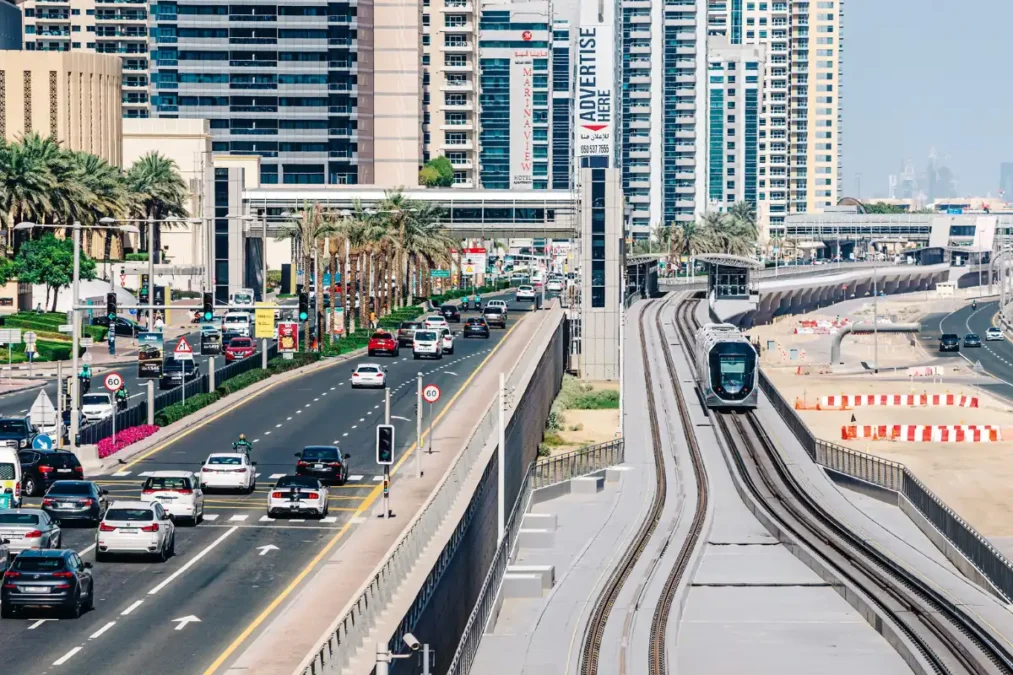
Dubai is actively investing in physical infrastructure. The RTA has committed to 30 major transport projects over three years, including road expansions, upgraded interchanges, and smart traffic systems. The Metro Blue Line remains the most important long-term intervention. According to the RTA, the line will connect International City, Dubai Silicon Oasis, and Mirdiff when completed in 2029, potentially reducing pressure on some of the city’s most congested corridors.
However, it still doesn’t address the problem of massive traffic congestion beyond Mirdiff toward Sharjah and Ajman from where a large chunk of residents commute daily to Dubai for work. Currently, the RTA runs double and single decker buses between emirates, but there’s no plan for an inter-emirate metro line yet.
Research published by UN-Habitat estimates that Dubai’s infrastructure investments have already prevented more than $3 billion in economic losses over recent years. But the challenge remains the speed of growth itself. By 2040, the population is projected to reach 5.8 million. Without a major shift toward public transport adoption, the roads will continue to absorb that expansion. One lane, one bottleneck, and one morning traffic queue at a time. Dubai’s economy is expanding rapidly. The bigger question is how much of that growth is being quietly consumed by the cost of moving people across it.
Read More: US-Iran Gulf Clash Shakes Fragile Ceasefire as UAE Comes Under Fresh Attack