
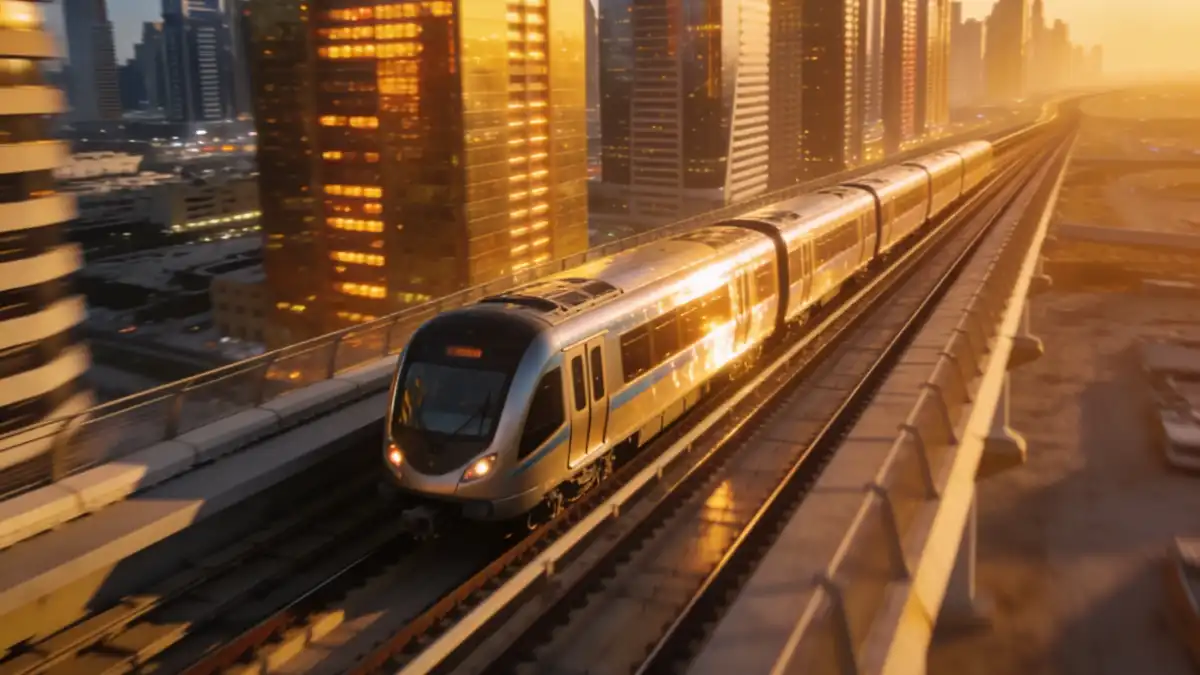
Dubai is proceeding in its own manner. Not only quicker, but also in a whole different manner. This city, known for its love affair with the private car, has now seen its citizens turn instead to alternative modes of transport: the Metro, the bus, and the ride by app rather than the steering wheel. The figures from the Roads and Transport Authority are stark: 802.1 million riders were in Dubai’s public transport network in 2025, which is a 7.4 percent increase from 747.1 million the previous year and has increased the average ridership each day to 2.2 million.
It is not just a record but also a signal.
The Numbers Behind the Surge
In 2025, Dubai Metro’s combined red and green routes had 294.7 million trips, representing a year-over-year growth of 7 percent. Across all modes of riding, one in three riders decided to ride Metro, the highest mode of choice.
The most-used stations correspond to the main places to live and work in Dubai. At the interchange at BurJuman, 17.8 million passengers were served on both lines. On the Red Line, Union Station was in the lead with 13.6 million, followed by Mall of the Emirates with 11.2 million and Burj Khalifa Dubai Mall with 10.9 million. Sharaf DG had the lead on the Green Line in ridership, amassing 10.5 million passengers.
The momentum was carried over in 2026. In total, New Year’s Eve saw the RTA move a record 2.8 million passengers in one night, 13 percent more than the same time last year, despite the Metro being unable to stop for one 43-hour stint.
Why More People Are Choosing Public Transport
The change is no coincidence. The roads in Dubai are filled due to the growing population, and people are acting sensibly. The plan for all services to be regular has added predictability to the Metro, especially when connecting residential properties to commercial areas during high traffic times of the day.
The shared mobility services, which comprise on-demand vehicles, hourly rentals, and app-based vehicles, experienced a remarkable increase in ridership (30%) and penetration (9% of total riders, from 6.2% in 2023). At the same time, rates of taxis have also decreased for the third year running—not because these vehicles are less demanded but because alternatives are more attractive.
The continual growth was attributed to the growing trust of passengers in the efficiency of the network and quality of the terminal services, which provided all modes of transport services, according to Mattar Al Tayer, director general of RTA. Combining metro, bus, tram, and marine transport with public sharing services as a single integrated system has reduced barriers that made public transport less convenient.
A Lifestyle Shift Taking Shape
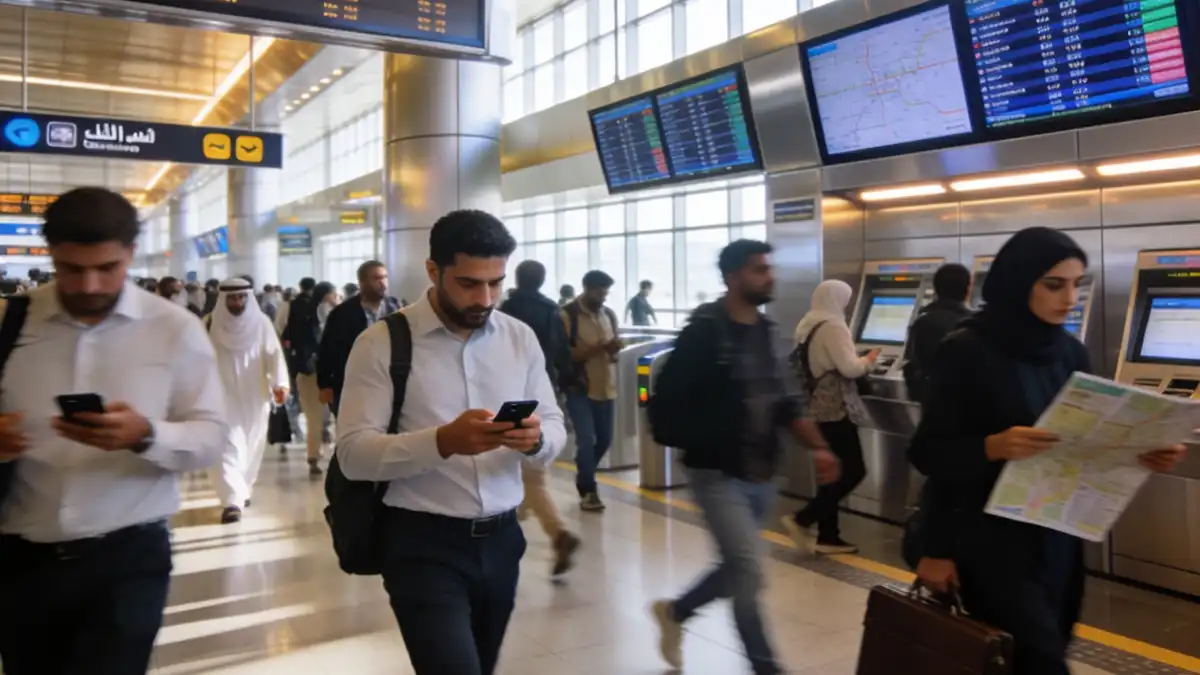
Look beyond the numbers, and there’s another story: a transformation in attitudes toward mobility in Dubai. The current trend of shifting to public transit is an intriguing change in culture for a city, where, until now, owning a car was considered a symbol of status and convenience.
Dubai’s need to achieve a 25 percent contribution to modes of transport by public and shared mobility has come within striking distance in 2024, accounting for 21.6 percent of the total number of trips, as part of the wider initiative of 42.3 percent sustainable mobility in Dubai’s Dubai Plan 2030.
Younger, more urban and more cost-sensitive individuals are the lifeblood of this change. For many people, especially the middle class, the Metro isn’t a last resort. It’s a will-go-on option. Now that it has extended to residential and commercial areas, its influence has become both practical and real for everyday life, where it was not the case 10 years ago.
What it Means for the City
When the people move, the city moves. This is not a transport issue; it’s also an urban planning issue, an environmental issue, and an economic issue when there’s a rise in Metro ridership.
The RTA also aims to increase bus and taxi passengers by 10 percent by extending six bus corridors (a total of 13 kilometers) and increase bus on-time performance by 42 percent and help to reduce journey times by 41 percent.
Plans for infrastructure in 2026 and beyond are grand. There is the blue line, which will be completed in 2029 and covers 30 kilometers with 14 stations—and the Gold Line, whose construction will start in 2026 and whose opening will take place in 2032. It will cover 42 kilometers with 18 stations and an investment of AED 34 billion, connecting from Al Ghubaiba to Jumeirah Golf Estates. The RTA has also studied the feasibility of building trackless trams, which run in 8 stations in the city and are electric-driven but lack rails.
Such investments indicate a vision of a developed urban city that is growing today to prepare for the future, a smarter and denser city with less dependence on cars. This record passenger flow achieved in 2025 was not the objective but the result of the route taken.
Also Read: UAE Ministry of Defence Signs Strategic Healthcare Partnerships for ICMM Abu Dhabi 2026