

The Moment the Game Opens Up
Not every attack is built slowly. Sometimes, nothing really seems to be happening. Teams are passing, recycling, waiting. And then suddenly — one pass goes forward, a runner breaks, and within a few seconds the ball is near the box.
That shift is what vertical transition is about.It’s not just about playing quickly. It’s about spotting the exact moment when the opponent isn’t fully set and going forward before they recover.
It’s More About Timing Than Speed
A lot of teams can play forward. That’s not the difficult part. The hard part is knowing when to do it. Too early, and the pass gets cut out. Too late, and the defence is already back in shape. The best teams find that small window where the opponent is slightly open — not fully exposed, but not organised either.
That’s when the forward pass becomes dangerous. It doesn’t need to be complicated. Sometimes it’s just a midfielder turning and playing into feet, or a quick layoff followed by a run in behind. Simple actions, but at the right time.
A Recent Example: Manchester City vs Arsenal
The recent game between Manchester City and Arsenal didn’t feel chaotic. In fact, for long periods, it looked quite controlled. Arsenal had the ball in phases. City stayed compact and didn’t overcommit. It was the kind of game where chances don’t come easily.
But the difference showed up in small moments.There were a few situations where City won the ball and didn’t slow things down. Instead of going backwards or sideways, they pushed forward quickly. One or two passes, and suddenly the play was already in Arsenal’s half.
Those moments didn’t always end in shots, but they changed the direction of the game. Arsenal didn’t have time to reset properly. That’s the value of vertical transition — not constant attacks, but well-timed ones.
Why It Doesn’t Work for Everyone
Some teams don’t use these moments well. They win the ball and still choose to recycle, even when space is there. Others try to go forward too quickly without control and end up losing it again.To make vertical transitions work, a few things need to be right:
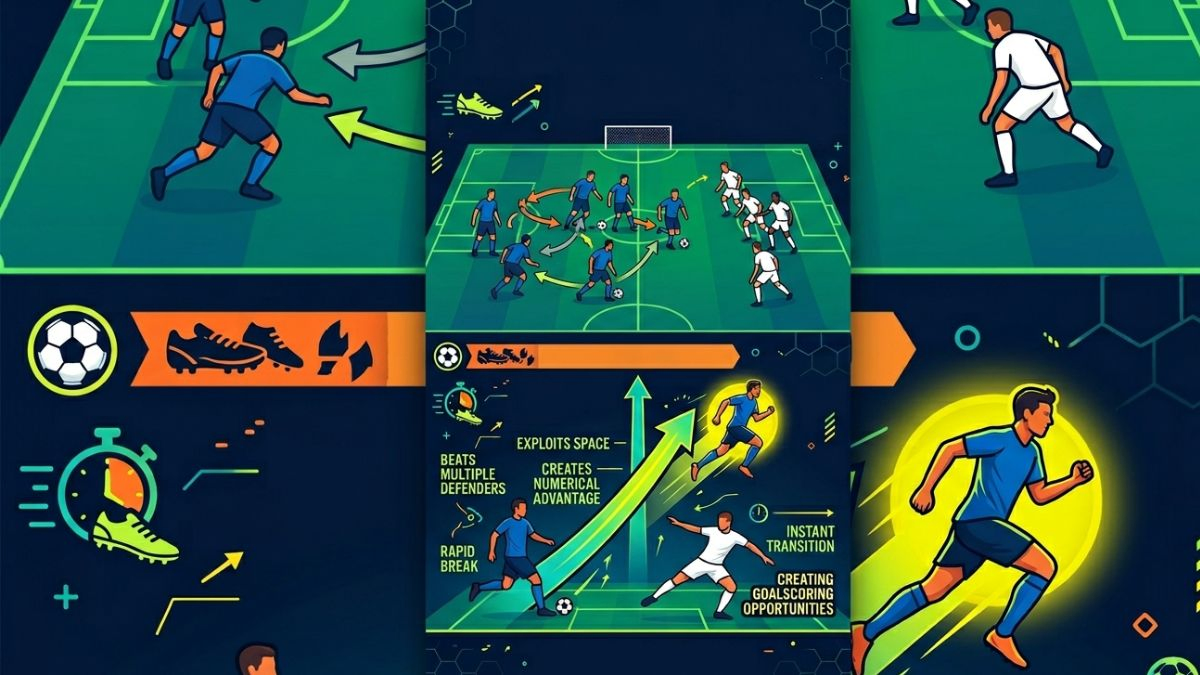
• players need to recognise the moment
• there has to be movement ahead of the ball
• and the pass has to be played with confidence
If even one of those is missing, the move usually breaks down.
It’s Not Just About Playing Fast
Speed helps, but it’s not the main point. A quick pass that doesn’t go anywhere doesn’t change anything. What matters is whether the ball actually moves the team forward into a better position. That’s why the first pass after winning the ball is so important. It decides if the team keeps control of the situation or turns it into something more.

Final Thought
Vertical transitions are easy to miss when you watch a game. They happen quickly, and then everything resets again. But those short moments are often where the real difference lies.
Not because they happen all the time, but because they come at the right moment. And once you start noticing them, it becomes clear — sometimes one forward pass is more valuable than ten safe ones.
Read More: One Moment Football: Why Champions League Knockouts Are Decided by Micro-Errors