
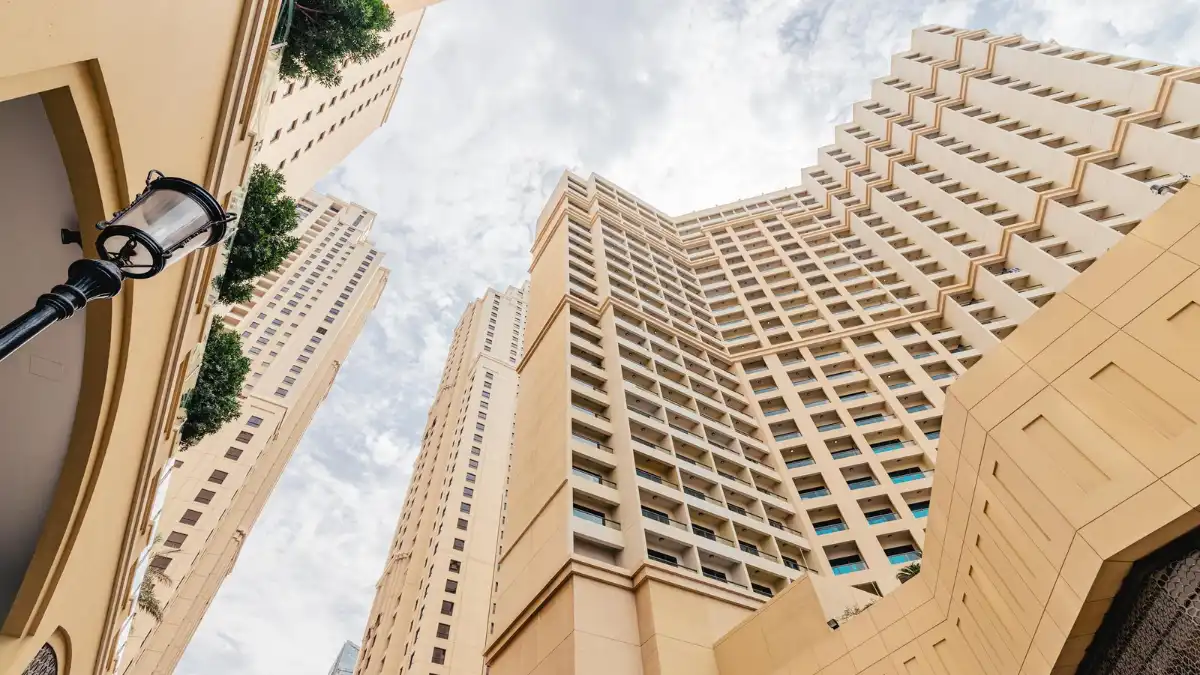
The Dubai real estate market is always running. And fast. Transactions turn into hundreds of billions. New launches drop every other week. Investors from other countries arrive. And they often come without the knowledge of local laws, developer reputations, or community nuances. So, in that environment, brokerage in real estate is the connecting bridge that keeps the whole system working.
Dubai has over 9,758 registered brokerage offices and more than 32,000 licensed brokers operating in Dubai in 2026. This scale exists because the real estate market cannot function without them.

Between the Clients and Contractors
Most people picture a broker showing apartments. The real job is much more complicated.
Dubai market brokers connect investors and buyers with projects that suit their budget, timeline and objectives. The info they provide is one that buyers can’t get without them: pricing trends, rental yields, upcoming infrastructure, developer background and also community comparisons. In addition, they schedule showings, work with developers, arrange for calls to developers, interpret offers. They receive input from developers, and manage the paperwork with DLD trustee offices.
They also liaise with landlords for tenancy agreements and advise on whether to lease. Brokers also advise on how to manage after the sale. According to Oliva, for ready secondary market properties, buyers must work with a licensed broker. Private sales still require DLD registration, and a broker manages the conveyancing, NOC process, and fund transfer coordination.
Related Stories
In practice, brokers in the Dubai real estate market act as advisors and navigators. They reduce friction for people who may not live in the city. They also help people who may not understand the regulatory framework. And those who may be choosing between dozens of projects without a clear way to evaluate them. That function is what makes brokerage in real estate more than a sales role.

The Sector that Moves the Markets
Zoom out from individual transactions and a bigger picture emerges. Brokerage in real estate functions as the distribution and sales network for the entire Dubai property ecosystem.
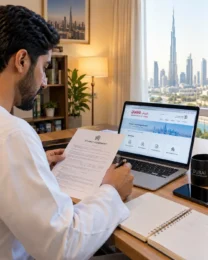
Developers build projects. However, brokers move units. According to TechBullion, off-plan transactions dominated Q1 2026, accounting for 70 percent of total market activity. Moreover, behind most of those transactions is a broker who connected the buyer to the project, explained the payment plan, and handled the booking process.
Brokers distribute inventory from dozens of developers to a global pool of buyers. They also create competition between projects by steering demand toward specific areas or launches, which influences pricing and absorption across the whole Dubai real estate market.
Furthermore, brokers add a layer of professionalism and standardisation that a purely self-directed market would lack. RERA law number 85 of 2006 governs brokerage commissions, fixing them at 2 percent of the transaction value for sellers on completed deals. That regulation sets a transparent, and consistent standard for how brokers in the market operate and get paid. Without that framework, brokerage in real estate would be far harder for buyers to trust and far harder to regulate at scale.

Trust, Regulation, & the Next Chapter
The role of brokers in the Dubai real estate industry is evolving quickly, and regulation is driving that change.
RERA requires every broker to hold a valid Broker ID Card, obtained by completing the Certified Training for Real Estate Brokers programme at the Dubai Real Estate Institute and passing the licensing exam. According to MeBusiness, Dubai’s DLD recorded more than 180,000 property transactions in 2024 as the off-plan boom drove a surge in broker registrations. Consequently, RERA is now tightening licensing standards and raising what it takes to qualify, in response to the quality gap created by a rapid increase in broker numbers.
The direction of that regulation is clear. Dubai truly desires brokers who are knowledgeable, compliant and more data informed. The way brokerage in real estate works on a daily basis is changing with the help of portals, CRM tools, virtual tours and digital transaction platforms.
Oliva says that the Dubai top 50 brokerage firms are responsible for about 35 percent of the total volume of transactions for residential properties registered at DLD while more than 4,500 firms are in the fray for the remaining transactions. The concentration reflects a trend toward the market converging on quality and compliance.
The real estate sector in Dubai and the Middle East is experiencing steady expansion, with new projects emerging and international capital flowing into the region. The real estate sector in Dubai and the Middle East is also constantly expanding, with new projects being launched and more international investment coming into the region.
Brokerage in real estate is not a side activity in Dubai. It is a core pillar of the market’s infrastructure, and the market depends on it to function at the pace Dubai demands.