
Real Madrid lived on chaos. Bayern Munich imposed control. And in the end, control won. In a seven-goal thriller that swung wildly between brilliance and disorder, this was not just about moments—it was about structure versus survival. For 85 minutes, Madrid rode the storm. One moment of indiscipline ended everything.
Chaos Was Madrid’s Weapon — And Their Weakness
From the very first 35 seconds, the game refused to settle. Arda Güler punished Manuel Neuer’s mistake to instantly flip the tie. It wasn’t a planned attacking move—it was opportunism, chaos, instinct.
Related Stories

That pattern repeated throughout the first half. Madrid didn’t control the game—they disrupted it.
- Quick transitions
- Direct vertical passes
- Moments of individual brilliance
Güler’s second goal, Kylian Mbappé’s equalizer—each came from broken structure, not sustained dominance. And that was the key problem. Because chaos keeps you alive. But it doesn’t always win you knockout ties.
Bayern’s Control Was Relentless
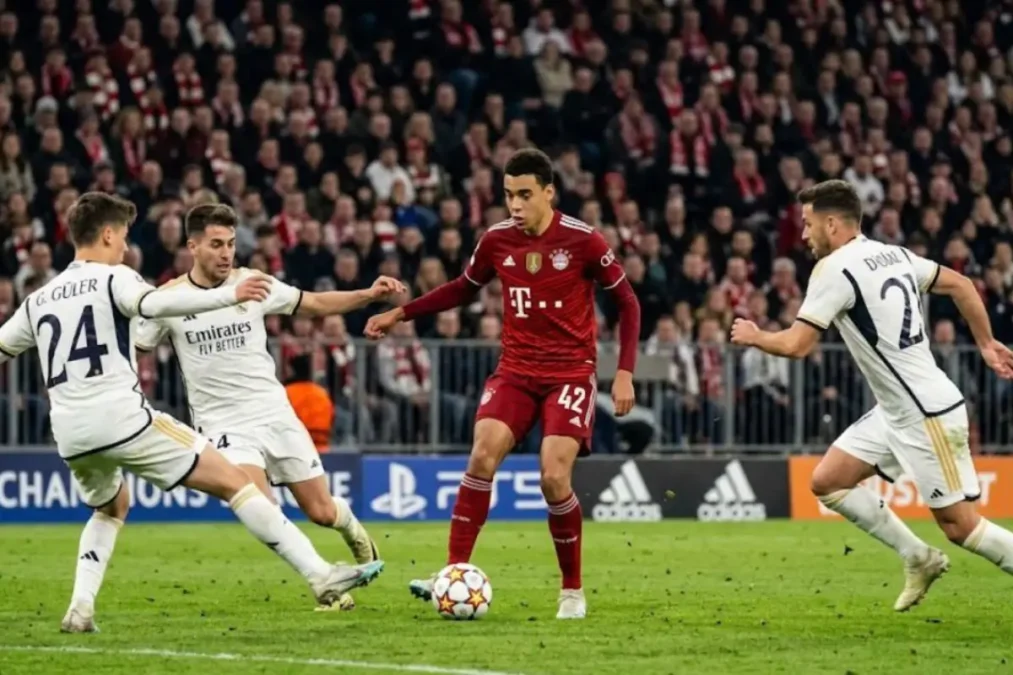
While Madrid chased moments, Bayern controlled everything else.
67% possession
648 passes vs 304
Territorial dominance across both halves Joshua Kimmich and Aleksandar Pavlović dictated tempo, constantly resetting attacks and pulling Madrid out of shape.
Even when Bayern conceded, their structure never collapsed. That’s what separated the two sides. Madrid had moments. Bayern had control.
Harry Kane: The Reference Point Madrid Couldn’t Handle
Harry Kane didn’t just score—he controlled the game. His equalizer before half-time wasn’t just a goal. It was a tactical statement.
- Dropping deep to link play
- Pinning centre-backs
- Creating space for runners like Michael Olise and Luis Díaz
Madrid never found a solution. Every time they regained momentum, Kane slowed the game down and handed control back to Bayern.
The Turning Point: Camavinga’s Moment of Indiscipline
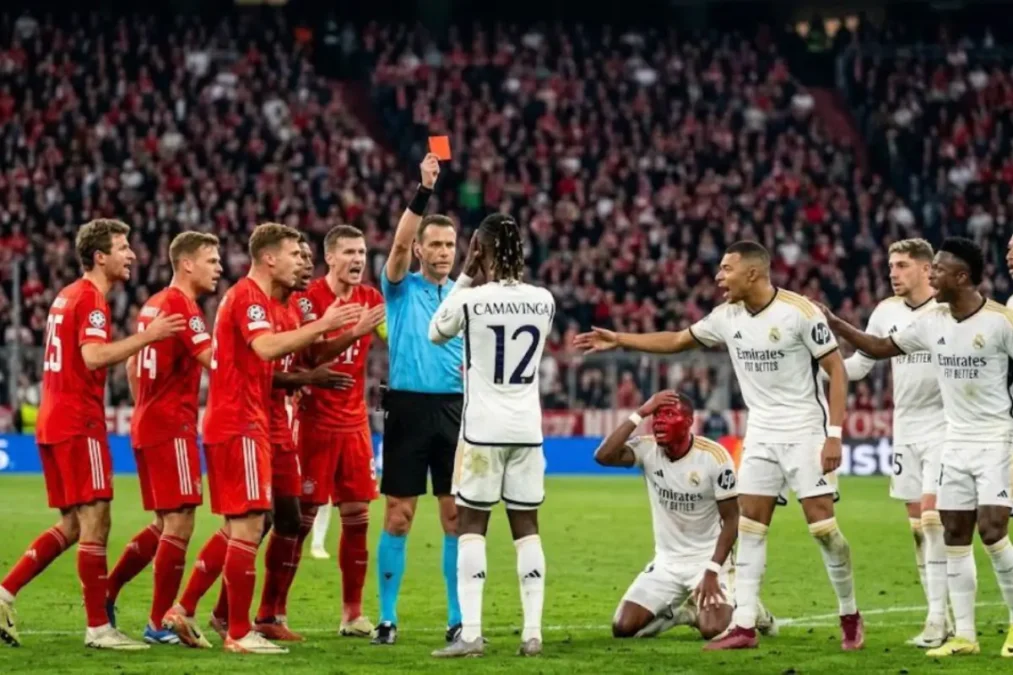
At 3-3, Madrid was still alive. Then came the moment that defined the tie. Eduardo Camavinga—brought on to stabilize midfield—lost control.
- A foul on Kane
- Then delaying the restart
- A second yellow card
Game over. Not tactically. Mentally. At this level, margins are brutal. And Madrid crossed it.
Late Goals Were Inevitable, Not Lucky
When Luis Díaz scored in the 89th minute, it felt decisive. When Michael Olise added the fourth, it felt inevitable. Because Bayern didn’t need chaos to win—they created pressure.
- Sustained possession
- Repeated entries into the final third
- Overloads against a 10-man defense
- Madrid wasn’t beaten by moments. They were worn down.
What This Means: A Shift in European Power Dynamics
For years, Real Madrid thrived in games like this. Survive. Strike. Win. But this time, they couldn’t bend the game to their will. Instead, Bayern Munich controlled it—and closed it.
Now, a semi-final clash with Paris Saint-Germain awaits. A different kind of test. Control vs chaos… again.
Conclusion
Madrid played on the edge all night. Bayern stayed within structure. And in knockout football, structure almost always wins— especially when your opponent makes the final mistake.
Also Read: Did Hansi Flick’s Tactical Stubbornness Cost Barcelona Their Champions League Dream?