
For large parts of the night at Anfield, Liverpool looked like the team in control. They pressed high, moved the ball well, and spent long spells in PSG’s half. It had the feel of a game where the breakthrough was only a matter of time. But that moment never really came.
At this level, control on its own doesn’t win games — and this was a perfect example. Liverpool finished with 21 shots and more of the ball yet couldn’t find a way through. PSG, on the other hand, waited for their chances and took them when it mattered. That contrast ended up deciding everything.
Related Stories
Liverpool’s Pressure… Without the Final Touch
Liverpool didn’t struggle to get into good areas.
Their narrow attacking shape allowed them to combine through midfield, with Szoboszlai and Mac Allister trying to dictate play. Wirtz drifted around intelligently, looking to pick gaps in PSG’s setup.
On paper, the numbers look strong:
- 21 shots
- 7 on target
- 8 corners
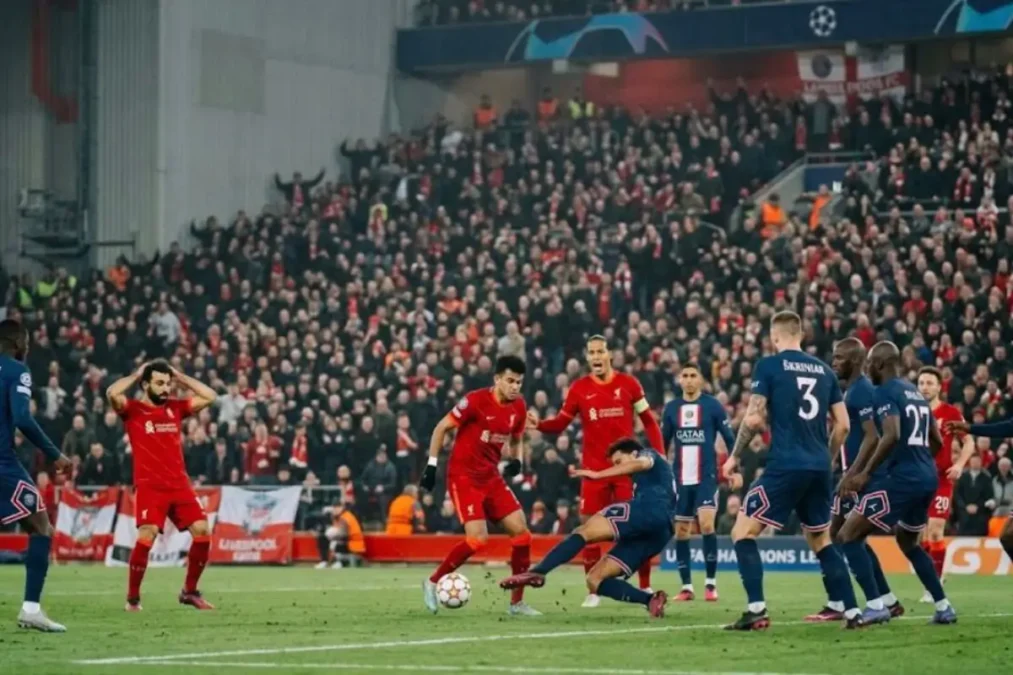
But watching the game told a slightly different story. Too many moves broke down at the last moment. Crosses didn’t quite land, shots came a bit too early, and PSG rarely looked stretched. It was pressure, yes — but not the kind that really forces mistakes.
PSG Stayed Calm — And That Was Enough
PSG never seemed in a rush. They sat deeper, stayed compact, and focused on keeping things simple. Their midfield did a good job closing spaces rather than chasing the ball, which made Liverpool’s job harder.
Still, they always carried a threat. With Kvaratskhelia wide and Dembélé looking for central spaces, PSG only needed one clean break. They didn’t create much — but they didn’t need to.
The Moment That Shifted Everything
Liverpool had chances to change the game.
The biggest came when Mac Allister went down in the box. For a moment, it looked like the turning point — but VAR said no. And from there, the energy dipped slightly.
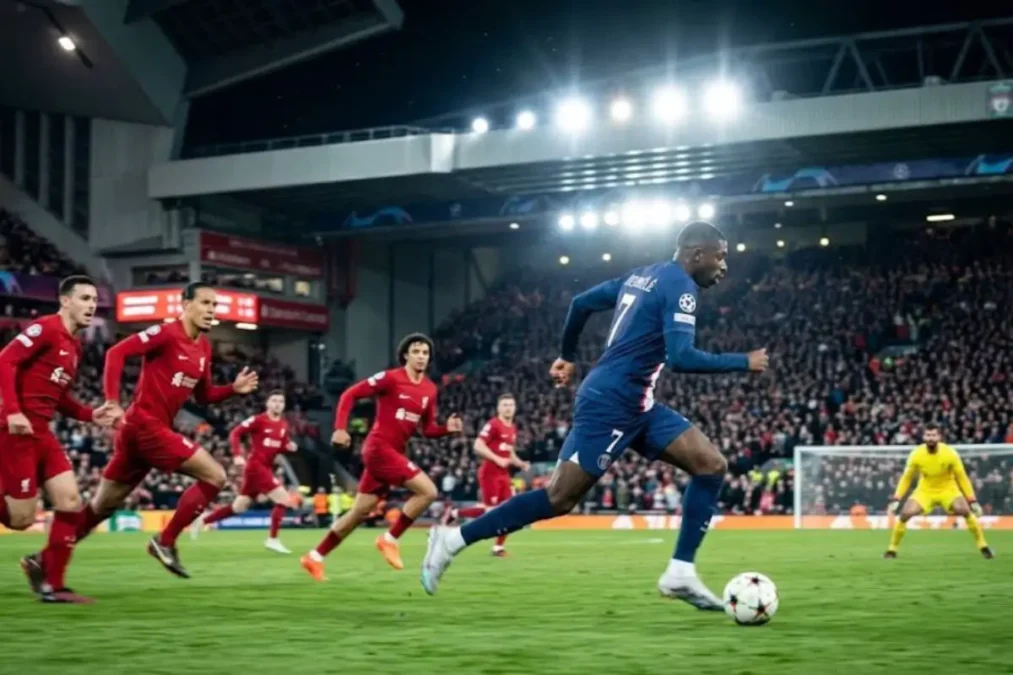
PSG picked up on it almost immediately. One quick transition later, Liverpool were caught open. Dembélé found space, drove forward, and finished with real confidence. It wasn’t a complicated move — just sharp, direct, and effective. That’s all it took.
Risk vs Balance: Slot’s Approach
Arne Slot made a few bold calls, but they didn’t fully click. Isak struggled to get involved and was eventually taken off, while changes in attack disrupted rhythm. As Liverpool pushed harder, the balance started to go.
Full-backs moved high, midfielders committed forward — and suddenly there was space behind.
Against PSG, that’s always a risk.
And eventually, it showed.
Dembélé Made the Difference
Games like this often come down to one player.
Dembélé didn’t need many chances, but he made the key ones count. His movement caused problems throughout, and when the opportunity came, he didn’t hesitate. The first goal shifted the game. The second, late on, finished it. Simple as that.
Control vs Efficiency
Across the tie, the difference was pretty clear.
Liverpool had more of the ball, more shots, more control. PSG had the sharper edge. And over two legs, that’s what matters most.
Final Thought
Liverpool won the midfield battle. They controlled territory. For long stretches, they looked the better side. But none of that means much without goals.
PSG showed how to manage moments — stay patient, wait for openings, and be clinical when they arrive. In knockout football, that’s often the only thing that counts.
Also Read: UAE Schools Reopen: Flexible Return and Hybrid Learning Strategy Boosts Student Support