
If you live close to Dubai Harbour, June 2026 is going to be a different experience behind the wheel of a car. Especially for those, who commute to work in the morning via Hessa Street to Abu Dhabi or takes a quick route down the roads near Motor City and Arabian Ranches. As per the Roads and Transport Authority (RTA), some of the most functional new Dubai roads are being provided this month, in a single calendar month. Here’s exactly what is opening and when, and what it means for your daily trip.
The Bridge That Changes Everything
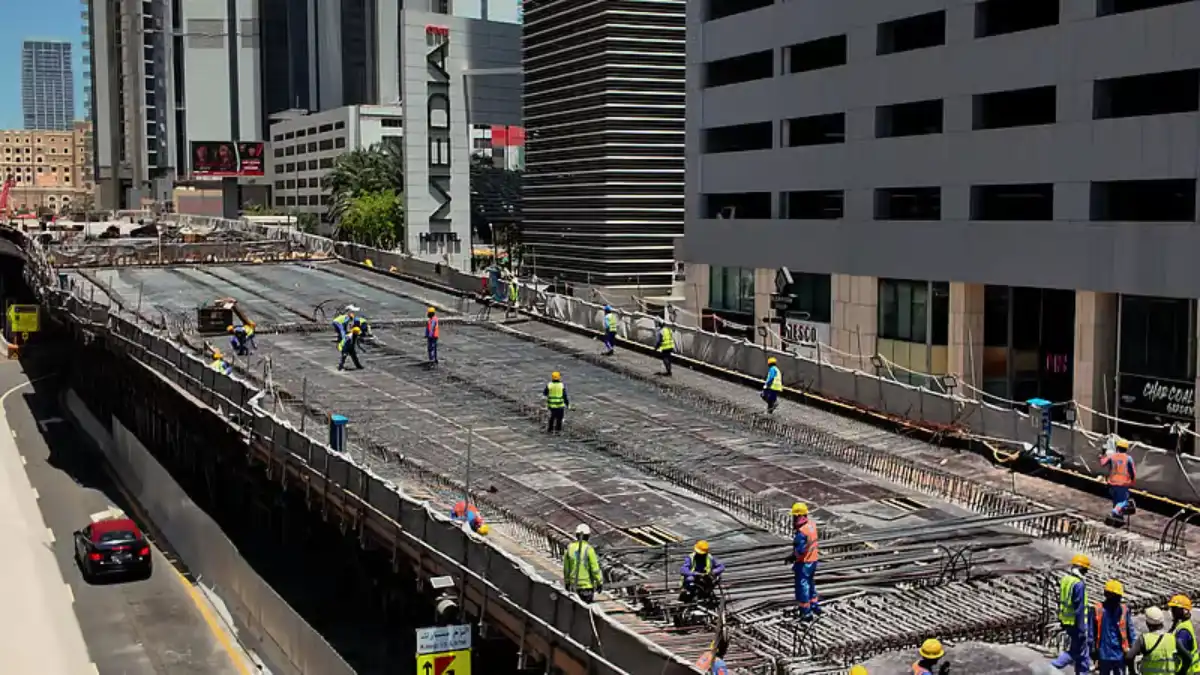
The Roads and Transport Authority (RTA) has completed 90 per cent of a 1,500-metre bridge with direct entry and exit between Sheikh Zayed Road and Dubai Harbour, which is developed with Dubai-based private investment firm Shamal Holding. The two-lane structure is one of the more prominent new Dubai roads projects that are underway this year.

The bridge begins at Interchange 5 on Sheikh Zayed Road near the American University of Dubai (AUD) and will cross Al Naseem Street and Al Falak Street, then over King Salman bin Abdulaziz Al Saud Street and reach Dubai Harbour Street.
The most relevant number is the travel time shift. The bridge will save the time for crossing between Sheikh Zayed Road and Dubai Harbour from 12 minutes to 3 minutes. It will eventually have the capacity for as many as 6,000 cars to pass through it in either direction per hour. There are currently 12 teams with 1,400 engineers and workers on site. Records show over 4.2 million work hours logged since the project began.
It opens in two stages. Phase 1 opens this June, allowing motorists from Sheikh Zayed Road travelling from both Deira and Jebel Ali to access Dubai Harbour directly via the new bridge. Phase 2 is expected to follow in July with traffic opening from Dubai Harbour towards Al Naseem Street, and access from the new bridge towards the intersection of King Salman bin Abdulaziz Al Saud Street and Al Naseem Street.
For residents of Dubai Harbour and the surrounding waterfront zone, located between Bluewaters Island and Palm Jumeirah, this ends one of the more persistent daily frustrations of living in an area that the road network has not fully caught up with yet.
Sheikh Zayed Road Gets More Room
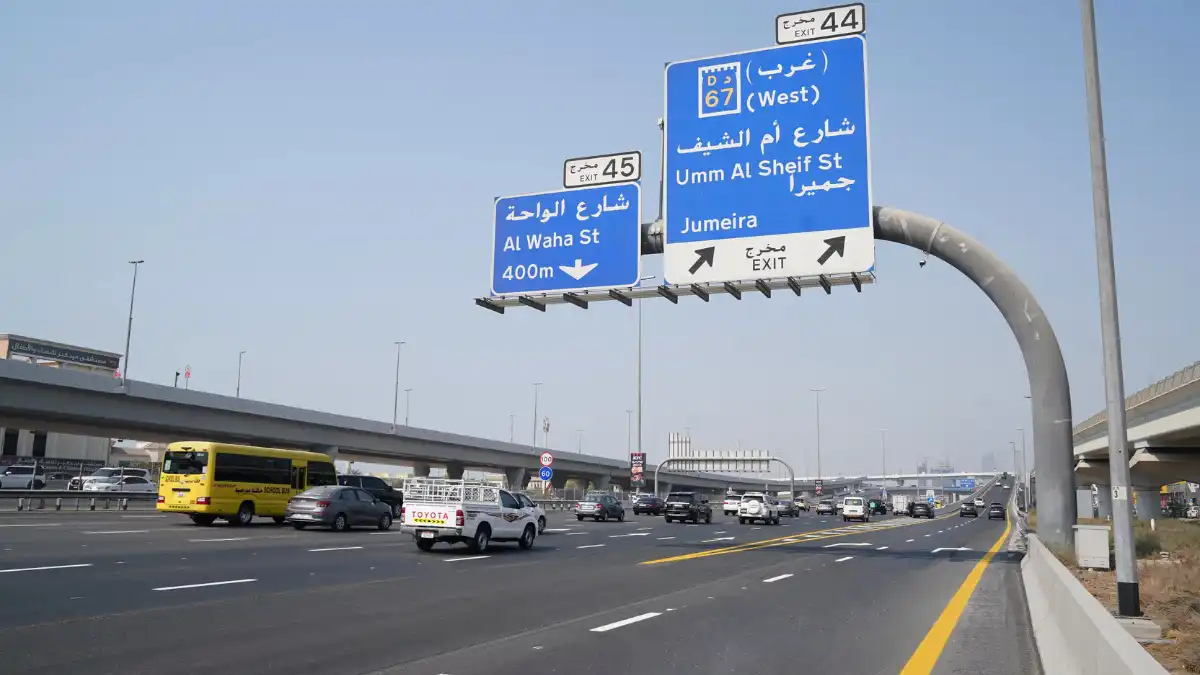
Among the seven new development projects the RTA has scheduled across Dubai this June, one of the most impactful for daily commuters is the addition of a new traffic lane on Sheikh Zayed Road for motorists travelling from Hessa Street towards Abu Dhabi, scheduled to open from June 22. The stretch is one of the city’s most crowded evening intersections. The new lane is constructed to optimise capacity on a corridor that carries some of Dubai’s densest peak-hour traffic movement.
This upgrade is a direct continuation of work that has already been carried out. The RTA has fully revamped Hessa Street along its entire length of 4.5km from Sheikh Zayed Road to Al Khail Road in April 2026. The project increased road capacity from 8,000 to 16,000 vehicles per hour and cut end-to-end travel time from 15 to 4 minutes. The new SZR lane extends that relief further down the Abu Dhabi commute route, solving a pinch point that the Hessa upgrade alone could not fully solve.
New Dubai Roads: Two New Links for South Dubai
The last week of June brings two more new Dubai roads that directly serve residential communities in the southern and western parts of the city. On June 28, the RTA will open a new connecting road between Emirates Road and Sheikh Zayed bin Hamdan Al Nahyan Street, improving access to the Villanova and Arabian Ranches III communities. Residents of both neighbourhoods currently face longer loop routes to reach Emirates Road. This link creates a direct connection that removes those extra minutes from every trip.
On the same date, a second road linking Al Qudra Road and Hessa Street between Dubai Studio City and Motor City will also open. This corridor serves a dense cluster of residential and creative industry communities that share limited east-west road access. Connecting Al Qudra Road to Hessa Street through this gap fills a gap in the grid that commuters from these areas have navigated around for years.
These are not the megaprojects which dominate the headlines. These practical, targeted new Dubai roads upgrades take away the background friction from daily life. The broader programme is part of efforts to develop an integrated road network that supports growth across key areas, said Mattar Al Tayer, Director General of the RTA. The benefit is simpler than that for the hundreds of thousands of residents whose routes pass through these corridors regularly. It is a few minutes back, given to them every single morning.
Read More: Emirates Road Accident Kills Seven, Injures Nine