
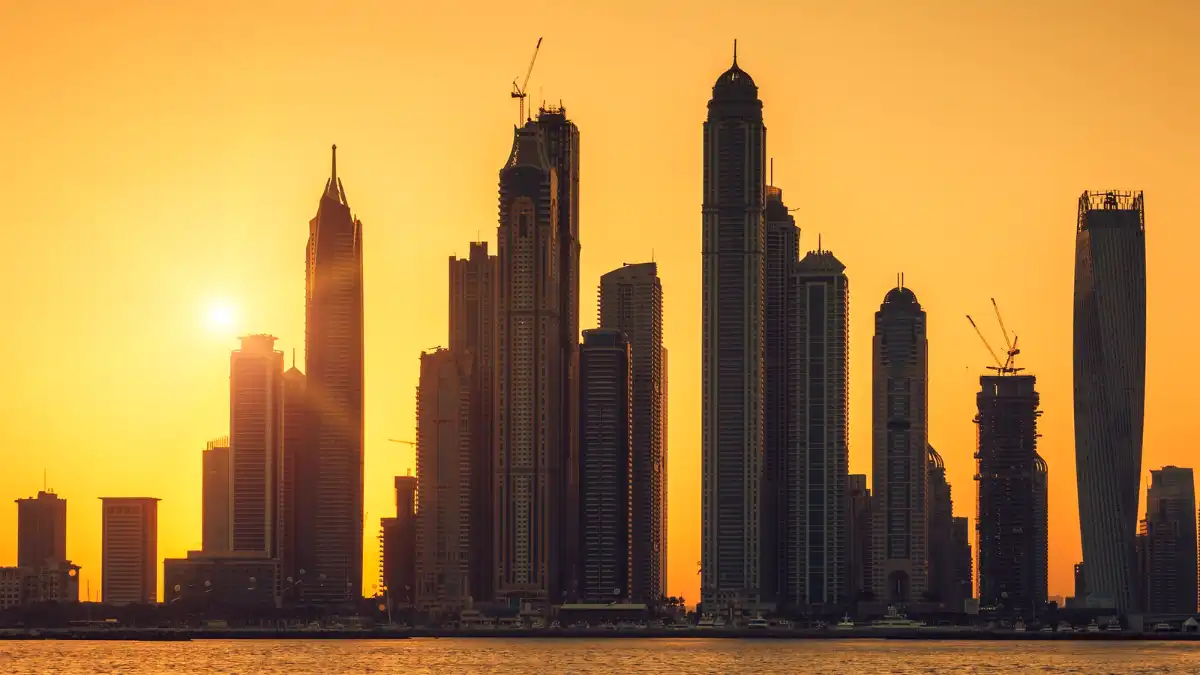
Somewhere in Dubai this January, a family from Lahore signed a sales agreement on a two-bedroom apartment in Dubai South. They had been watching the market since 2024, saving, waiting, trying to time a city that does not really wait. But they did not know that they were about to sign in what would turn out to be the strongest single month in Dubai’s real estate history. They were not trying to be clever about timing. They were just ready. That is, in many ways, the story of Dubai real estate in the first half of 2026. A market shaped less by speculation and more by people who decided this was where they were staying.
The January That Set the Record
The first week of 2026 gave no indication of what was coming. January ended as the single most active month in Dubai’s property market history. Total transaction value reached AED 72.4 billion. A 63 percent jump year on year, driven by a 90 percent surge in off-plan primary sales. That one month alone represented nearly one-third of the entire Q1 2026 total.

The full first quarter closed at AED 252 billion across 60,303 completed transactions, a 31 percent year-on-year increase in value. The investor base grew to a record 48,448 buyers. Total real estate procedures reached 718,160 during the quarter.
More than 85 percent of transactions were led by owner-occupiers rather than short-term speculators. The average time it takes a renter in Dubai to become a homeowner dropped to 4.8 years.
These are not numbers that describe a speculative bubble. Rather, they describe a city that people are moving to and staying in.
February 28: The Day Dubai Real Estate Paused
The war changed things. It could not have done otherwise. When US and Israeli strikes on Iran began on February 28, and Iranian missiles started landing across the Gulf region, people who had been planning to buy stopped planning.
Real estate transaction volumes in the UAE fell 37 percent year on year in the first 12 days of March, and 49 percent month on month, according to analysis by Goldman Sachs. The DFM Real Estate Index fell around 20 percent in the days after the escalation.
However, one detail matters enormously in contextualising what that drop actually represented. Physical property prices only dipped 4 to 7 percent from their February peak at the worst point. The gap between the 20 percent drop in stock indices and the 4-7 percent dip in actual prices shows that market mood shifted, not market value.
That distinction separates a temporary scare from a structural change. The scare lasted weeks. But the structure remained.
April: The Dubai Real Estate Comeback
April transaction volumes rebounded 23 percent. Mortgage activity hit its year-high for 2026 at AED 9.02 billion. Villa search activity on major property platforms reached its highest share of all sale searches for the year. The buyers who had paused in March came back to a market that had barely moved on price despite their absence.
By the end of May, sellers had cut listed prices by a combined AED 2.36 billion across 3,292 properties. This figure sounds alarming until you compare it to the total market size. AED 2.36 billion in voluntary price cuts across a market that did AED 252 billion in Q1 alone represents less than 1 percent of quarterly volume. It is not a fire sale. It motivates sellers to adjust to a buyer who has more choices than before.
Dubai Real Estate: The Off-Plan Problem
Where the real stress lives in this market is off-plan secondary sales. Off-plan secondary apartments are, on average, trading 10 to 15 percent below original values in many cases. “Lots of opportunistic investors jumped on the off-plan bandwagon, assuming that prices would keep going up on a monthly basis, and are now super exposed,” said Mario Volpi, senior sales manager at Eva Real Estate. “Many of them don’t have the inclination, the money, or the stomach to pay for the next instalment or the next few installments.”
This is not a broad market problem. It is concentrated among a specific type of buyer who entered the market with a speculative rather than a long-term lens. For genuine end-users, the Dubai Real Estate correction is not alarming. Instead, it is the market redistributing from flippers to residents.
Dubai’s development pipeline remains substantial, with an additional 65,000 apartments and 12,500 villas scheduled for delivery by year-end, though a considerable number are now expected to be delayed to 2027 due to supply chain bottlenecks.
What the Numbers Say About Who Is Actually Buying
In 2026, the median value of housing in Dubai will be around AED 2.1 million. In Dubai, 87 percent of the transactions are cash deals, with a discount on the various properties being around 4 percent below asking price. Dubai residential prices have risen by some 10 to 13 per cent year on year, well exceeding the low single-digit inflation rate across the UAE.
As buyers became comfortable with dealing with assets with delivery dates ranging from two to three years, off-plan sales in Q1 2026 increased to 30,000 transactions valued at AED 73.4 billion, compared with Q1 2025 which saw a big increase by 25,000 transactions valued at AED 53.9 billion. One-bedroom apartments in the price range AED 1 million to AED 1.5 million had the highest demand.
The nationality mix of buyers tells its own story. Buyers from India, the UK, Pakistan, Europe, Russia, and North America continue to drive demand. Resident investors now account for more than half of all investment by value, which is a structural shift reflecting people who live in Dubai and are choosing to own here rather than rent.
The Big Projects That Changed the Conversation
The first half of 2026 brought two project announcements that fundamentally widened the market’s horizon. Emaar’s AED 200 billion megaproject, spanning more than 4.5 million square metres and designed for 150,000 residents across five zones, is the largest single real estate development ever announced in the country.
Majid Al Futtaim and Dubai South signed an AED 62 billion mixed-use community agreement. Emirates broke ground on a USD 5.1 billion engineering complex that will employ thousands in proximity to Al Maktoum Airport.
These are not incremental additions. They are structural commitments to a version of Dubai that exists in ten years, not ten months. For residents choosing whether to rent or buy right now, they are a signal about where the city is heading.
Dubai Real Estate: What the Rest of 2026 Looks Like
The Property Monitor Dynamic Price Index reached 231.51 by May 2026, down from a peak of 235.03 in October 2025. Price appreciation in Dubai is forecast to moderate to 5 to 8 percent for 2026, down sharply from the 12 to 22 percent annual growth seen during 2024 and 2025.
Dubai has also scrapped the AED 750,000 minimum property value previously required for individual buyers to qualify for a two-year residency visa, lowering the entry threshold for new owner-residents.
The first half of 2026 gave Dubai real estate a stress test it did not choose and passed more convincingly than anyone had the right to expect. Prices dipped, volume fell, confidence wavered, and then the buyers came back. They are still coming.
The market that emerges from the second half of 2026 will be shaped by whether the war de-escalates, whether the pipeline of new supply is absorbed, or whether the people who call Dubai home keep deciding to own it.
Read More: Iran Strikes a Vessel and CENTCOM Attacks Iran. An old Cycle, a New Crisis