
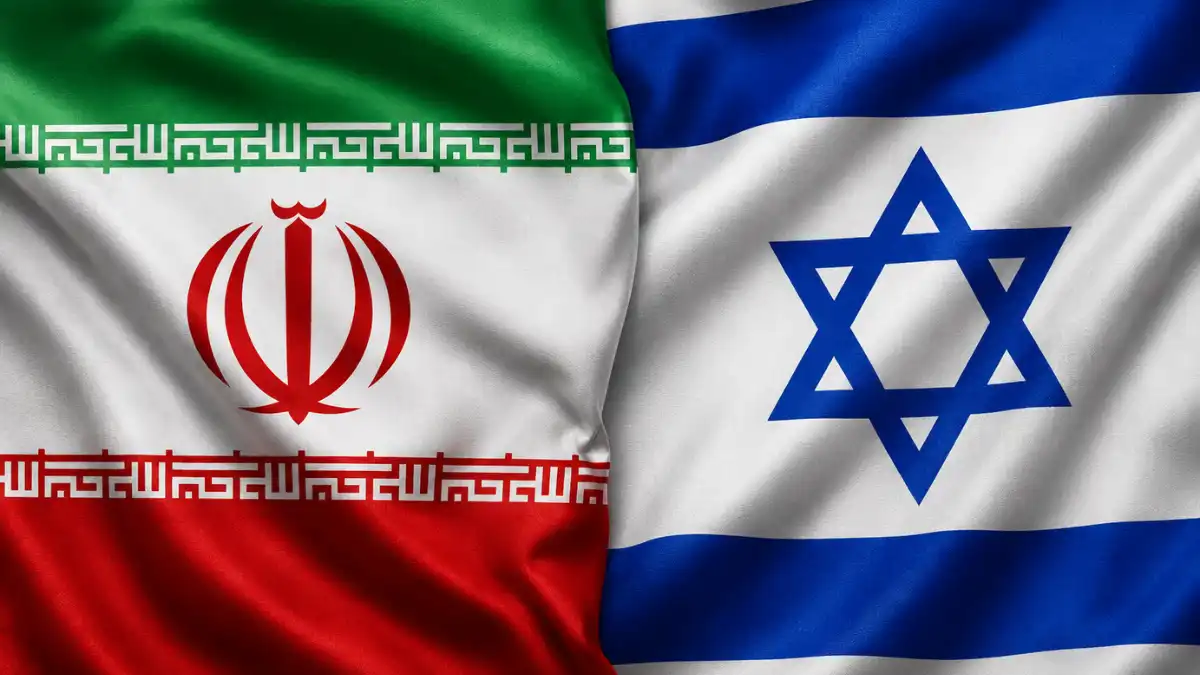
The Iran-Israel ceasefire appeared to gain momentum on Monday after both countries announced they had halted attacks following an appeal from U.S. President Donald Trump to immediately stop hostilities. While the pause eased fears of a broader regional conflict, officials in Tehran and Tel Aviv warned that military action could resume if either side perceived further aggression.
Even so, Tehran said it would resume strikes if Israel continued to hit Hezbollah in Lebanon.

The wave of attacks over the past 24 hours marked the most direct confrontation between Iran and Israel since an April ceasefire and threatened to wreck Washington’s efforts to reach an agreement with Tehran to end the war, which has gone on for more than three months.
Both Sides Target Strategic Sites
Oil prices rose as much as five percent after the flurry of attacks, then fell when Iran’s military said its first wave of strikes on Israel was over. The dollar retreated from its highest level in nearly two months.
A source briefed on the matter told Reuters that Israel had also decided to halt its attacks on Iran.

Israel struck Iranian targets after Tehran fired missiles toward Israeli territory late on Sunday. Tehran said its strikes were retaliation for Israeli attacks on strongholds of Iran-backed Hezbollah on the outskirts of Beirut.
Israel hit a petrochemical plant in southwestern Iran that it said was used to produce ballistic missiles. Iran’s Islamic Revolutionary Guard Corps (IRGC) said it retaliated with a strike aimed at a similar plant in the Israeli city of Haifa.

Iran Declares End to Operations
Iran’s military headquarters said it had “delivered a painful response” against Israel for its attacks on Lebanon, including Sunday’s strikes on the outskirts of Beirut.
“Accordingly, the operations of the armed forces are hereby declared halted; however, it is emphasized that if the aggressions and acts of mischief continue — including in southern Lebanon — much more severe and crushing actions than before will follow.”
Hours after Iran’s announcement, sirens sounded in the Zar’it area of northern Israel when a projectile was identified as falling in an area of southern Lebanon where Israeli forces are operating. No casualties were reported.
Related Stories

Israeli Defence Minister Israel Katz said that Israel would strike Hezbollah’s Dahiyeh stronghold in southern Beirut once more if there were attacks on northern Israel.
No Deaths were Reported by Authorities on Either Side
The exchange has complicated Trump’s push to end the war, launched by the U.S. and Israel on Feb. 28, and underscores how easily the conflict could widen into a broader regional confrontation. A ceasefire announced on April 8 had paused all-out warfare but flare-ups in the Gulf have continued.
In one of several posts on social media, Trump said Israel and Iran both wanted “an immediate CEASEFIRE! Final negotiations on ‘Peace’ are proceeding, subject to ignorance or stupidity getting in its way.” He added that a U.S. blockade of Iranian ports would remain in place until a final deal was reached.
An Israeli official said Trump had spoken with Prime Minister Benjamin Netanyahu on Monday.
In an interview with Axios published on Monday, Trump said he warned Netanyahu that if the Israeli leader went back to war with Iran, he might find himself fighting alone. “I said, ‘Bibi, you better be careful, or you will be on your own very soon,'” Trump said.
Israel’s Ambassador to the U.S. Yechiel Leiter pushed back on reports that Trump pressured Netanyahu, telling Fox News program Special Report that conversations between the two leaders were co-operative and accusing journalists of playing up a misleading narrative.
“They have a deep friendship that goes back some 40 years, and sometimes lovers have a spat, and sometimes the tension in the room and on the conversation can get a little heated,” Leiter said.
Officials Take Defiant Tone
Earlier, an Israeli military official said Israel was prepared to continue operations for “as long as it takes,” and confirmed strikes on newly rebuilt Iranian air defence systems in addition to the petrochemical target.
Iranian officials struck a similarly defiant tone. A military source quoted by the semi-official Tasnim news agency said Tehran was ready for a prolonged conflict and could renew strikes against U.S. interests in the region.
Iranian Foreign Ministry spokesperson Esmaeil Baghaei said Tehran was exchanging messages with Washington in an atmosphere of “extreme suspicion.” Israel’s actions in Lebanon, whether carried out with U.S. knowledge and consent or not, were aimed at sabotaging diplomacy, he added.
In Tehran, Iranian media reported explosions on Monday, with air defences shooting down a drone over the capital. There were no immediate reports of casualties or major damage.
Yemen’s Iran-aligned Houthis pledged in a statement to stop Israel’s maritime navigation in the Red Sea, and said they had also fired missiles at Israel. The Israeli military later said it intercepted a suspicious aerial target from Yemen after hostile aircraft sirens sounded in the Eilat area.
The Houthis have so far largely stayed out of the regional war. They control territory at the mouth of the Red Sea, increasingly important as an alternative route for millions of barrels per day of Middle East oil otherwise blocked by Iran’s grip on the Strait of Hormuz.
Also Read: Israel-Iran Truce in Jeopardy After New Wave of Cross-Border Attacks