

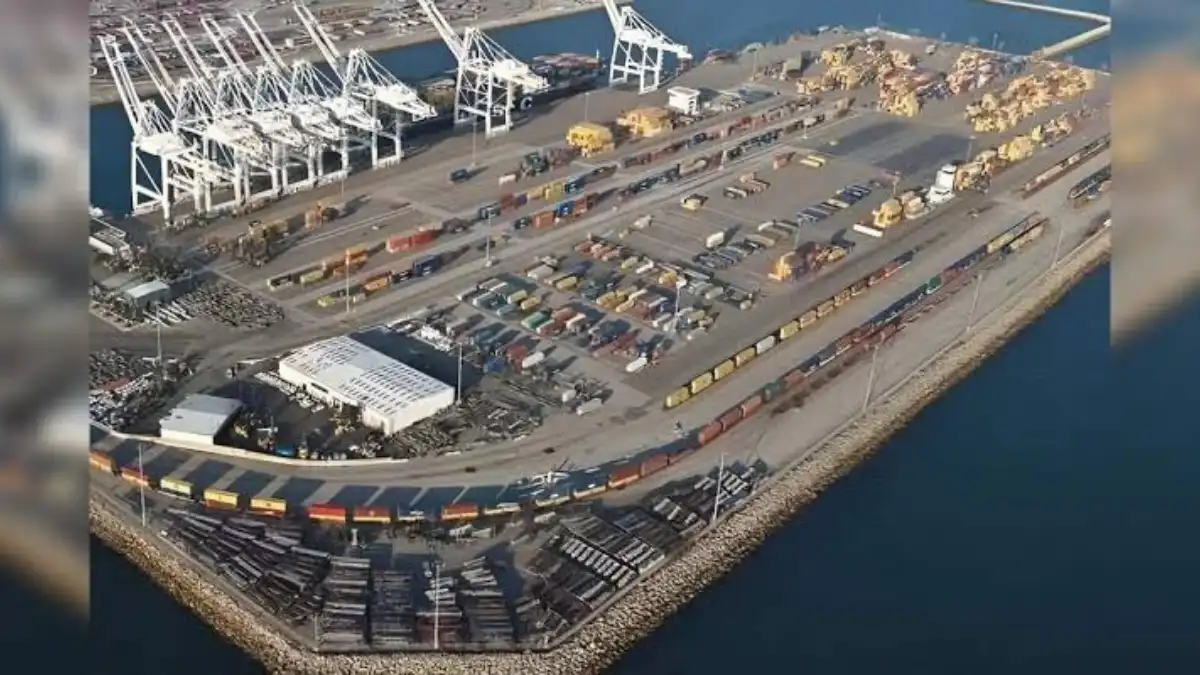
US strikes Chabahar marked a major escalation in the Iran-US conflict after American forces launched their first military attack on Iran’s strategic southeastern port city since the April ceasefire. The operation expanded the conflict beyond the Strait of Hormuz, with explosions and widespread power outages reported across Chabahar as Washington said it targeted maritime infrastructure linked to Iran’s military capabilities.
Explosions and Power Outages Reported
Residents in Chabahar reported hearing multiple explosions late Tuesday as Iranian state media confirmed that parts of the city experienced widespread power cuts following the attacks.
Related Stories

Emergency services were deployed after several areas sustained damage. While authorities have yet to release an official assessment of casualties or the full extent of the destruction, early reports indicate that key maritime infrastructure was among the targets.
According to US military officials, the strikes were carefully directed at facilities believed to support Iran’s ability to threaten commercial shipping in the region. Officials said civilian port operations and major energy infrastructure were intentionally avoided during the operation.
Maritime Facilities Targeted
Initial reports suggest the attacks struck port infrastructure, including piers, a maritime traffic control tower and nearby military installations linked to Iran’s naval operations.
The Pentagon said the objective was to weaken Iran’s capacity to disrupt international shipping routes rather than broaden the conflict or seize territory.
The military operation came only hours after US President Donald Trump declared that the ceasefire brokered earlier this year had effectively ended. Trump blamed Tehran for recent attacks on commercial vessels passing through the Strait of Hormuz, describing the military response as necessary.
NATO Secretary General Mark Rutte also defended the strikes, saying they were justified following what he described as repeated Iranian violations of the truce.
Why Chabahar is Strategically Important
The attack carries significant strategic implications because Chabahar is located on the Gulf of Oman, outside the narrow Strait of Hormuz that has long been the centre of regional military tensions.
As Iran’s only deep-water oceanic port, Chabahar serves as one of the country’s most important gateways to the Indian Ocean and plays a key role in regional trade.
The port has also attracted substantial investment from India, which views Chabahar as a critical part of a trade corridor connecting South Asia with Afghanistan and Central Asia while bypassing Pakistan.
Unlike previous US military operations that focused on Bandar Abbas and installations overlooking the Strait of Hormuz, the latest strikes demonstrate Washington’s willingness to target Iranian facilities farther east along the country’s coastline.
First Strike Since April Ceasefire
The operation represents the first known US military action in the Chabahar region since the Pakistan-brokered ceasefire reached in April temporarily halted direct hostilities between Washington and Tehran.
Although the truce significantly reduced military confrontations, tensions remained high in the months that followed as both sides exchanged accusations over maritime security incidents in the Gulf.
The ceasefire eventually collapsed after Iran was accused of carrying out attacks on several commercial vessels transiting the Strait of Hormuz.
In response, Washington launched more than 80 strikes against Iranian military targets and revoked sanctions relief that had previously allowed limited Iranian oil exports.
The latest operation signals that diplomatic efforts have given way to renewed military confrontation as both countries harden their positions.
Iran Condemns Attacks
Iran strongly condemned the US strikes, calling them a violation of the ceasefire agreement and warning that it would deliver a “massive” response against American forces operating in the region.
Iranian officials accused Washington of escalating the conflict and undermining regional stability, while maintaining that the country would defend its sovereignty against further attacks.
The renewed fighting has intensified concerns over security across one of the world’s busiest maritime trade corridors.
Analysts warn that any prolonged escalation could threaten commercial shipping through the Gulf and the Gulf of Oman, potentially disrupting global energy supplies and driving up shipping and insurance costs.
With Chabahar now emerging as a new flashpoint, the conflict appears to be expanding beyond its previous geographic limits, raising fears that military operations could spread further along Iran’s southern coastline and deepen instability across the wider Middle East.
Also Read: US-Iran Ceasefire Under Strain as US Launches Fresh Strikes