

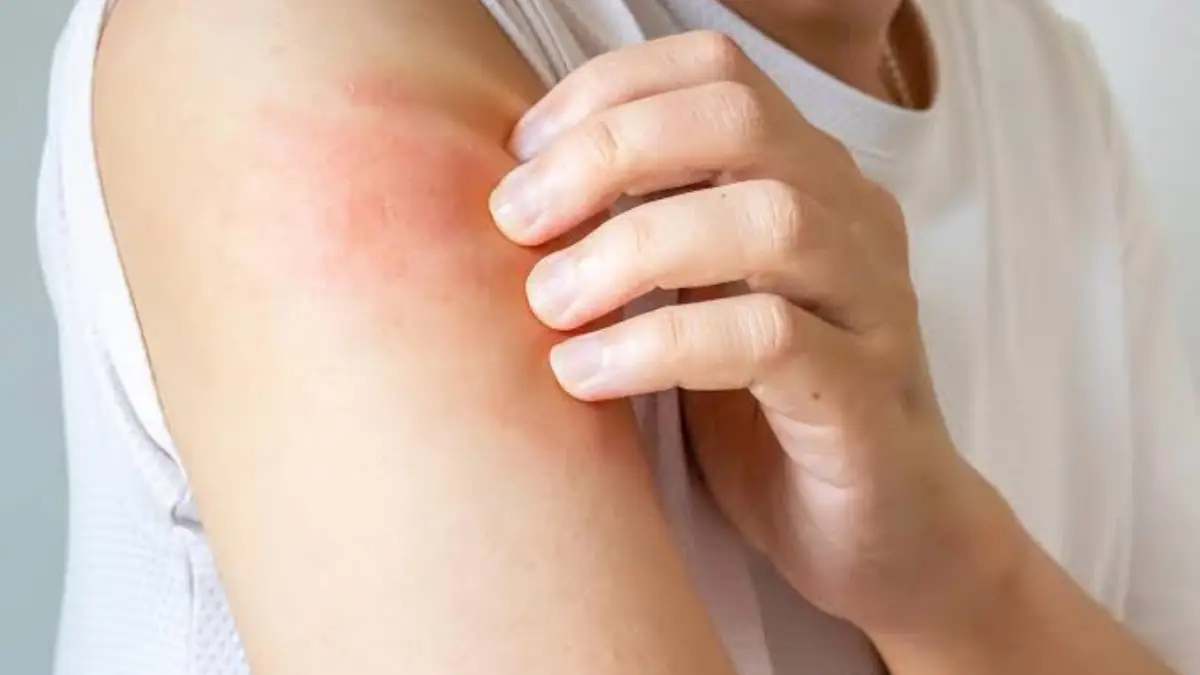
Why scratching an itch makes it worse has long puzzled scientists, but new research has uncovered the biological process behind the itch-scratch cycle. The study explains how scratching increases inflammation, making bug bites, rashes, and other skin irritations itchier and slower to heal.
New research reveals that scratching triggers immune responses in the skin that can make an itchy spot more swollen and even itchier, creating a self-perpetuating “itch-scratch cycle.” The findings also explain why scratching feels satisfying in the first place—and why resisting the urge is still the healthier choice.
Related Stories

Why scratching feels so good
Itching can result from a wide range of causes, including insect bites, allergies, skin irritants, and certain medical conditions. Although scratching often provides immediate relief, researchers say that sensation is short-lived.
Interestingly, scratching is not unique to humans. Many mammals—and even some fish—display scratching-like behaviours, suggesting the instinct has an evolutionary purpose. Scientists believe it may have originally helped animals remove parasites or defend against harmful microbes, but modern research indicates those benefits are limited.

The mouse study that uncovered the itch-scratch cycle
To better understand what happens beneath the skin, researchers led by Dr. Daniel Kaplan, a dermatologist at the University of Pittsburgh, studied allergic contact dermatitis, a common type of skin irritation caused by substances such as poison ivy or nickel found in jewellery.
The research team applied an irritant to the ears of mice and observed how their immune systems responded. Mice that scratched developed noticeably more swelling as inflammatory immune cells rushed to the affected area.
To determine whether scratching itself was responsible, researchers fitted another group of mice with veterinary-style protective collars—often called “cones of shame”—that prevented them from scratching.
The result was clear: mice that could not scratch experienced significantly less swelling and fewer inflammatory immune cells, demonstrating that scratching directly worsens skin inflammation.
Why bug bites become itchier after scratching
According to Dr. Kaplan, the findings reflect what many people experience in everyday life.
A mosquito bite that is left alone usually stops itching within five to ten minutes. However, scratching it repeatedly can turn a minor irritation into an inflamed, itchy spot that lingers for days.
The study suggests that scratching prolongs the body’s inflammatory response, keeping the affected area irritated far longer than necessary.
How the immune system fuels inflammation
Researchers also investigated the role of mast cells, one of the immune system’s first lines of defence.
These specialised immune cells release substances that help protect the body against germs and toxins. One of those substances is histamine, the chemical largely responsible for the itching associated with allergic reactions.
Scientists have long known that allergens activate mast cells. However, Kaplan’s team discovered another important trigger: pain.
Since people typically scratch until the skin begins to hurt, pain-sensing nerve cells release a chemical messenger known as substance P. Previous research by Kaplan’s team found that substance P activates mast cells through a separate biological pathway from allergens.
This creates a “double hit”—allergens trigger mast cells, and scratching activates them again through pain signals—resulting in greater inflammation, increased swelling, and even more itching.
Is scratching ever beneficial?
The obvious question is why scratching evolved if it can be so harmful.
One long-standing theory suggests scratching helps remove parasites such as fleas or mites. Kaplan’s team also explored whether scratching could provide another benefit by helping the body fight bacteria.
In experiments involving mice infected with Staphylococcus aureus, a common skin bacterium, researchers found that mice allowed to scratch had lower bacterial levels than those prevented from scratching.
The extra inflammation produced by scratching may temporarily strengthen certain immune defences. However, researchers stress that this modest benefit does not outweigh the damage caused by prolonged inflammation.
As Dr. Kaplan put it, “Ultimately, scratching is deleterious. You should avoid scratching,” while acknowledging that resisting the urge is often easier said than done.
How to relieve an itch without scratching
The best treatment depends on the underlying cause of the itch. For mild cases caused by insect bites, poison ivy, or contact dermatitis, dermatologists recommend:
- Hydrocortisone cream
- Calamine lotion
- Oatmeal baths
- Oral antihistamines, when appropriate
Researchers are also studying new medications known as MRGPRX2 blockers, which target the molecular pathway activated by scratching. These treatments could eventually improve care for chronic skin conditions such as eczema.
A simple trick to break the itch-scratch cycle
Dr. Kaplan also recommends using creams containing menthol, which temporarily create a cooling sensation that distracts the brain from the itch.
The cooling effect can help interrupt the urge to scratch long enough for the irritation to subside naturally.
“It’s like a cheat code,” Kaplan said, explaining that avoiding scratching—even briefly—can help stop the itch-scratch cycle before it spirals into prolonged inflammation.